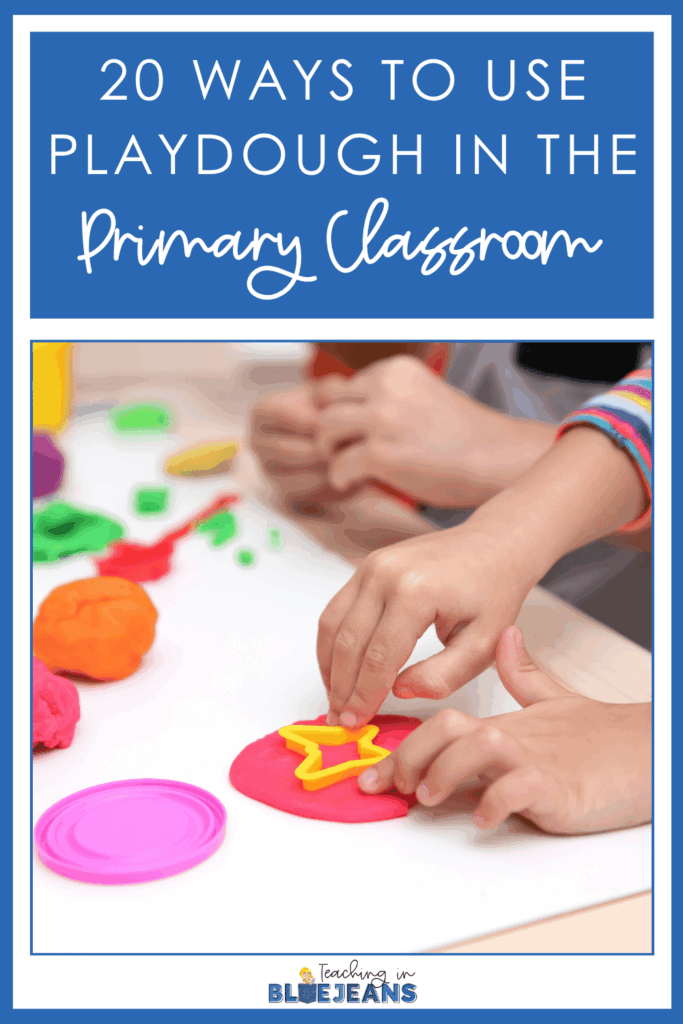


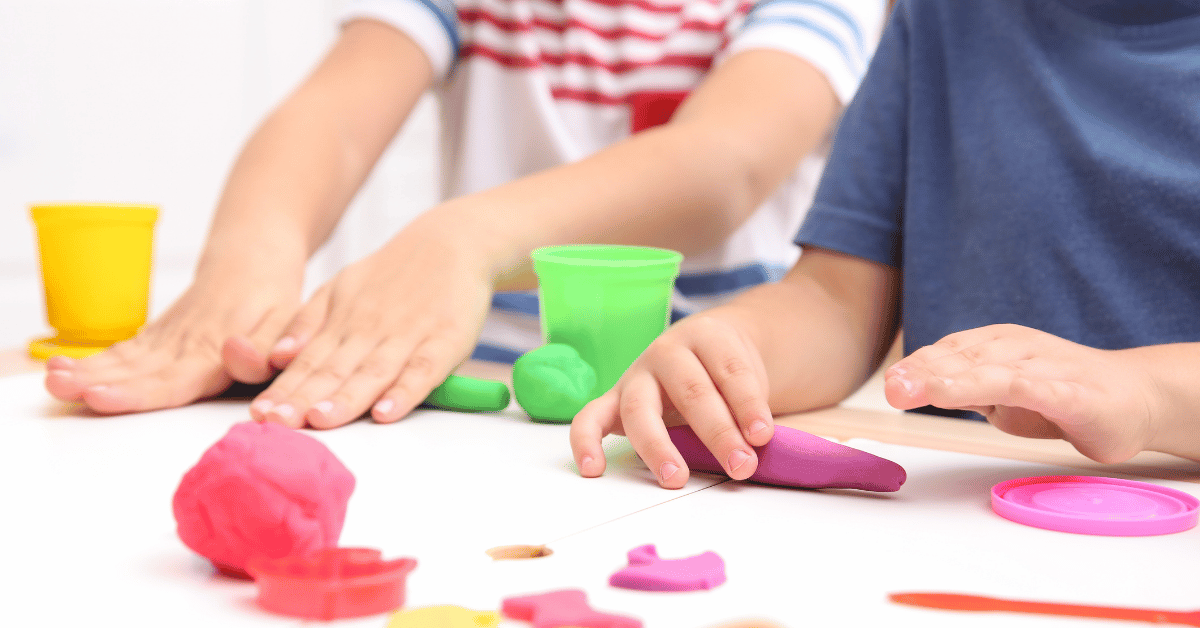
Playdough can be a great tool in the classroom! It gives students a chance to demonstrate their learning with hands-on experiences. Playdough gives students a chance to use hands-on learning to demonstrate their knowledge. It can help students explain concepts in a low-risk environment. Plus, it is so versatile that you’ll never run out of ways to use it. Come along with me as I share a variety of playdough activities I use in my classroom!
If you are worried about the mess playdough could create in class, here are 4 quick tips I use in my classroom. If playdough is not one of your go-tos in class because you are worried about the mess, this post is for you!
This will help keep playdough from being stepped on and making a permanent appearance in your carpet, and will help students gain some independence and responsibility while using this fun medium in class.
Let’s get to fun stuff!
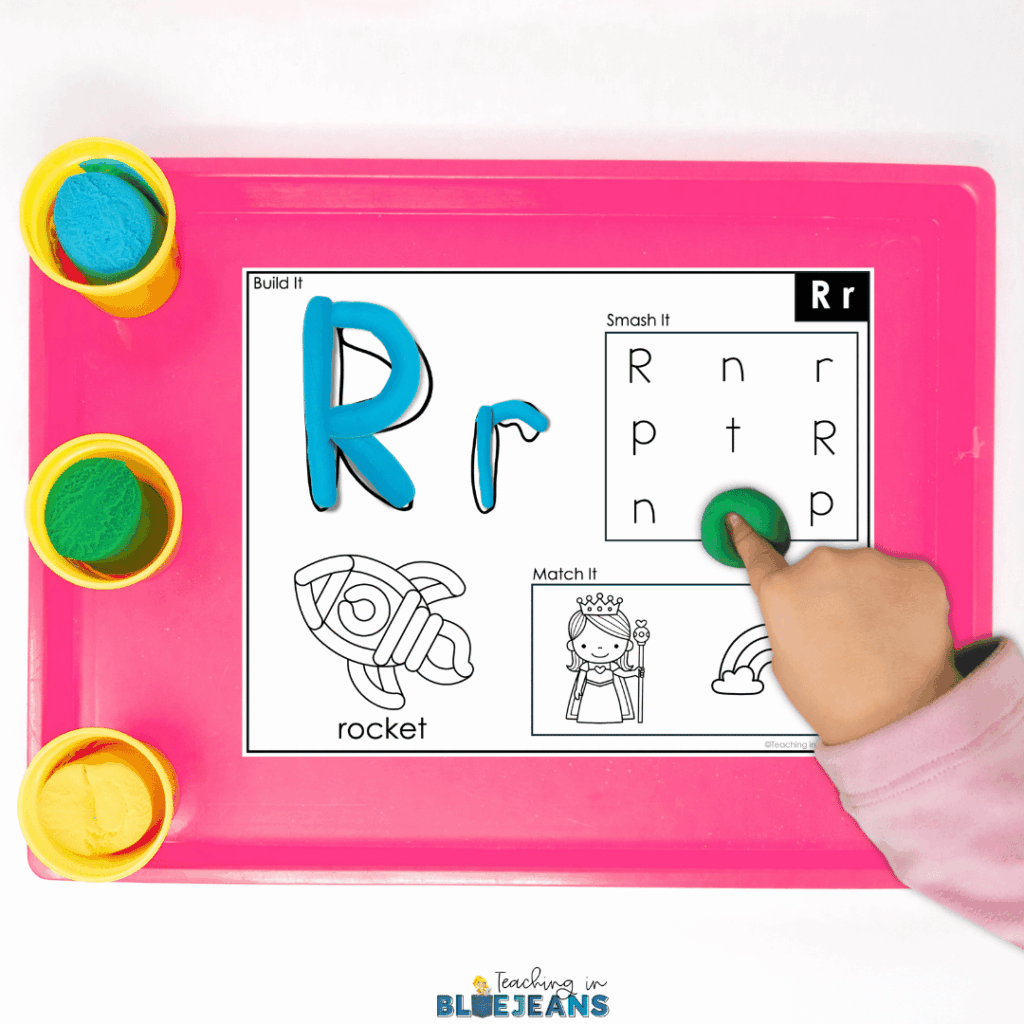
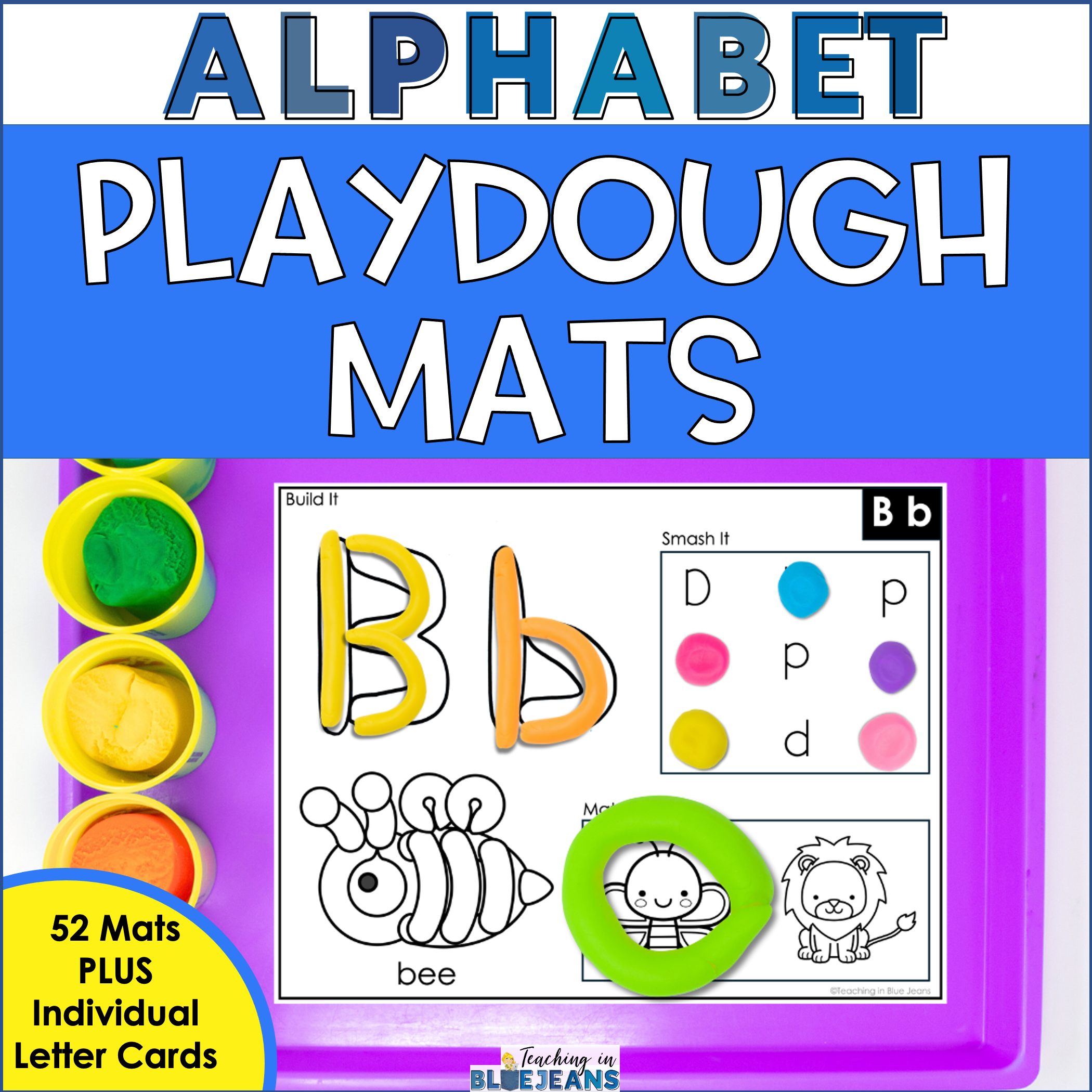
First, I have my students trace letters with their fingers on a provided laminated letter mat. Then, I have my students roll playdough into “snakes” and form uppercase and lowercase letters. They can lay the letters on the mat for extra guidance if needed.
If you need a ready-made resource, check out my alphabet mats. It includes 79 alphabet cards, 3-4 cards per letter that can be used with playdough or without! It even includes short and long vowel sound mats. need
Forming letters with playdough builds fine motor strength and letter recognition, laying the foundation for handwriting development.
This activity takes a little bit of prep work. I print each child’s name on a mat. Using playdough to form each letter, my students create their names. If you’d like an editable packet with name playdough mats and more name activities, you can find those in this Editable Name Writing Activities Packet.
Practicing their own names helps students with personal identity, early literacy, and builds confidence in print awareness.
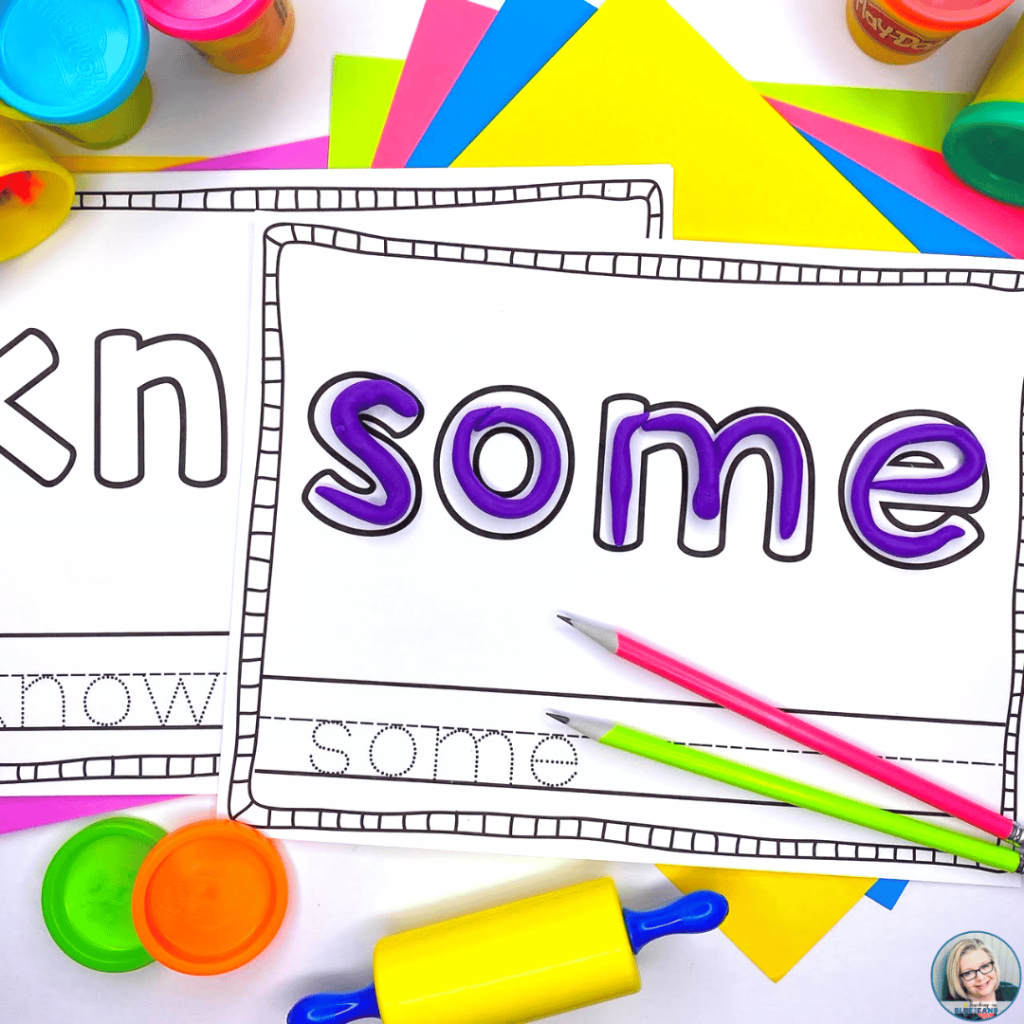
Working on sight words can be a mundane activity. Using playdough is a great way to add some fun. I have my students use laminated sight word cards, and similarly to letter and name practice, they roll the playdough into snakes and put it on the letters on the cards. Then, the kids switch cards. It helps keep the prep work down!
I have multiple sets of sight word playdough mats! Each set includes the sight words for that level from the Dolch sight word list:
Hands-on word building reinforces visual memory and spelling patterns while strengthening word recognition.
Pencil-holding practice is fun with this activity! I like to have my students pinch off small pieces of playdough from the ball and roll it into small balls between their thumb and pointer finger.
Pinching and rolling develops small muscle control in the fingers and hands, essential for pencil grip and writing stamina.
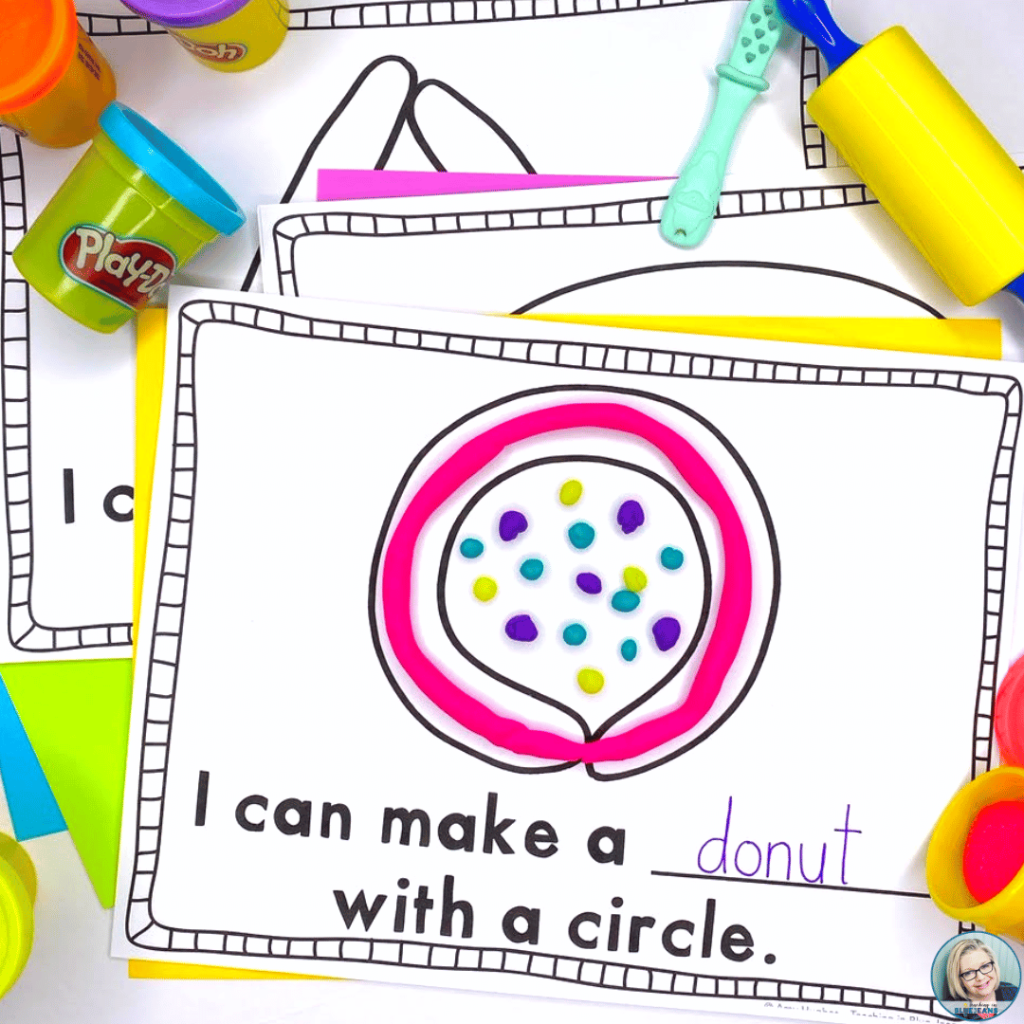
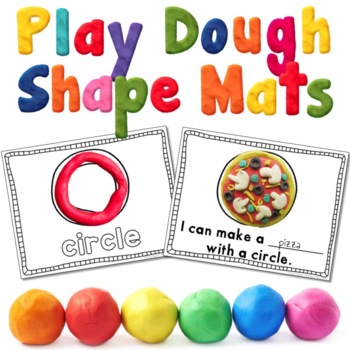
This no-prep resource is great for shapes. My students get an assigned shape card. Rolling the playdough into snakes, they then place the playdough to match the shape. This resource includes:
Tracing shapes helps develop spatial awareness, shape recognition, and prepares students for geometry concepts.
I like to have my students roll small balls and count them into cups, ten frames, or egg cartons. This activity would be great for a 1:1 check-in to check students’ progress on this skill. It is also a great way to make worksheets more engaging since they can use the playdough as a manipulative to help them.
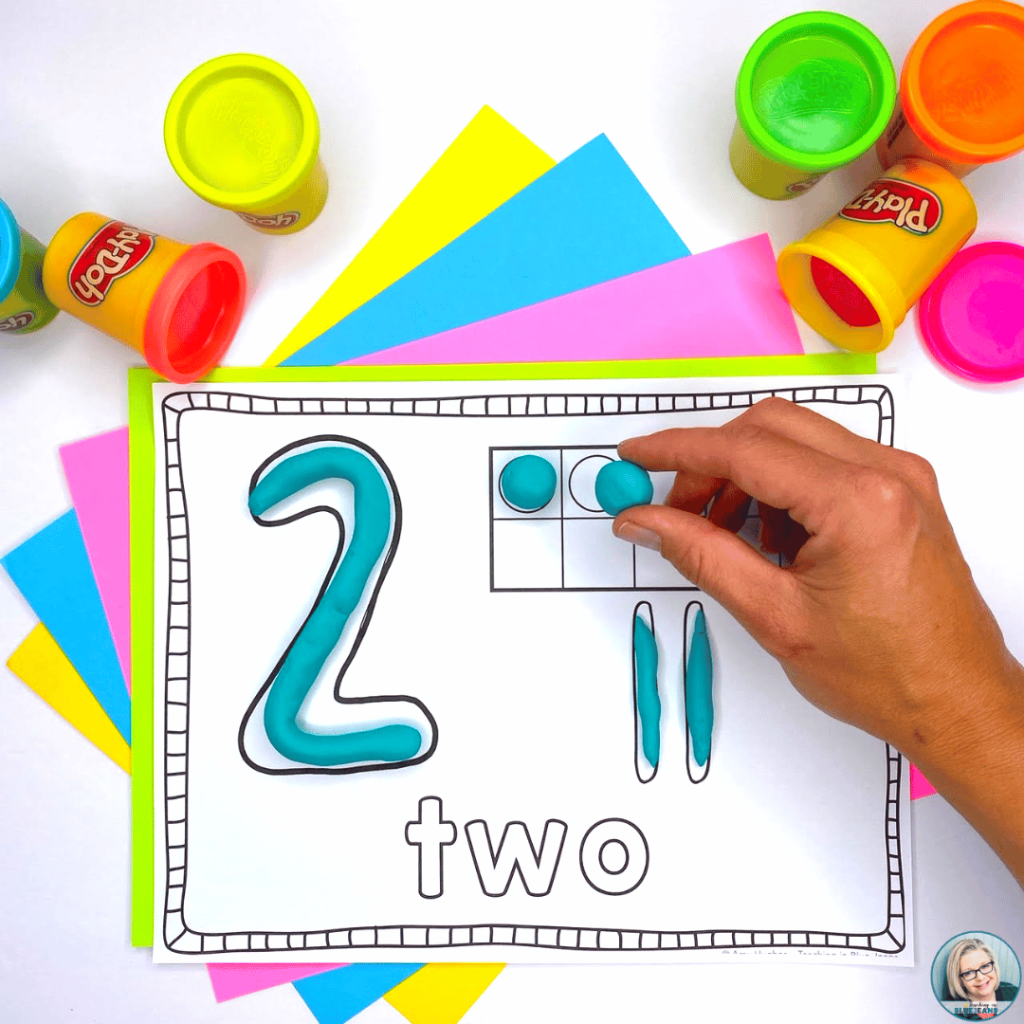
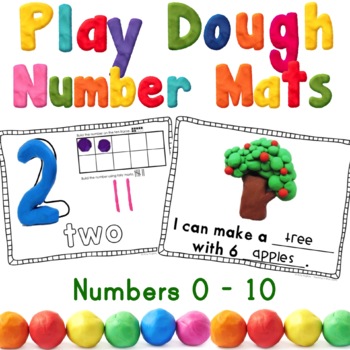
If my students need some review on numbers, I like to use the number playdough mats, which include 44 mats that cover concepts such as:
Manipulating objects to count builds one-to-one correspondence, an essential early math concept.
Word problems can be a challenge for students. Using playdough to allow students to create “stories” is a helpful way to tackle them. I have my students use playdough objects to “act out” simple word problems, such as “You have 3 apples and get 2 more.” My students now have a visual of 5 apples and can answer the word problem.
Using manipulatives to act out word problems builds a concrete understanding of addition and subtraction operations.
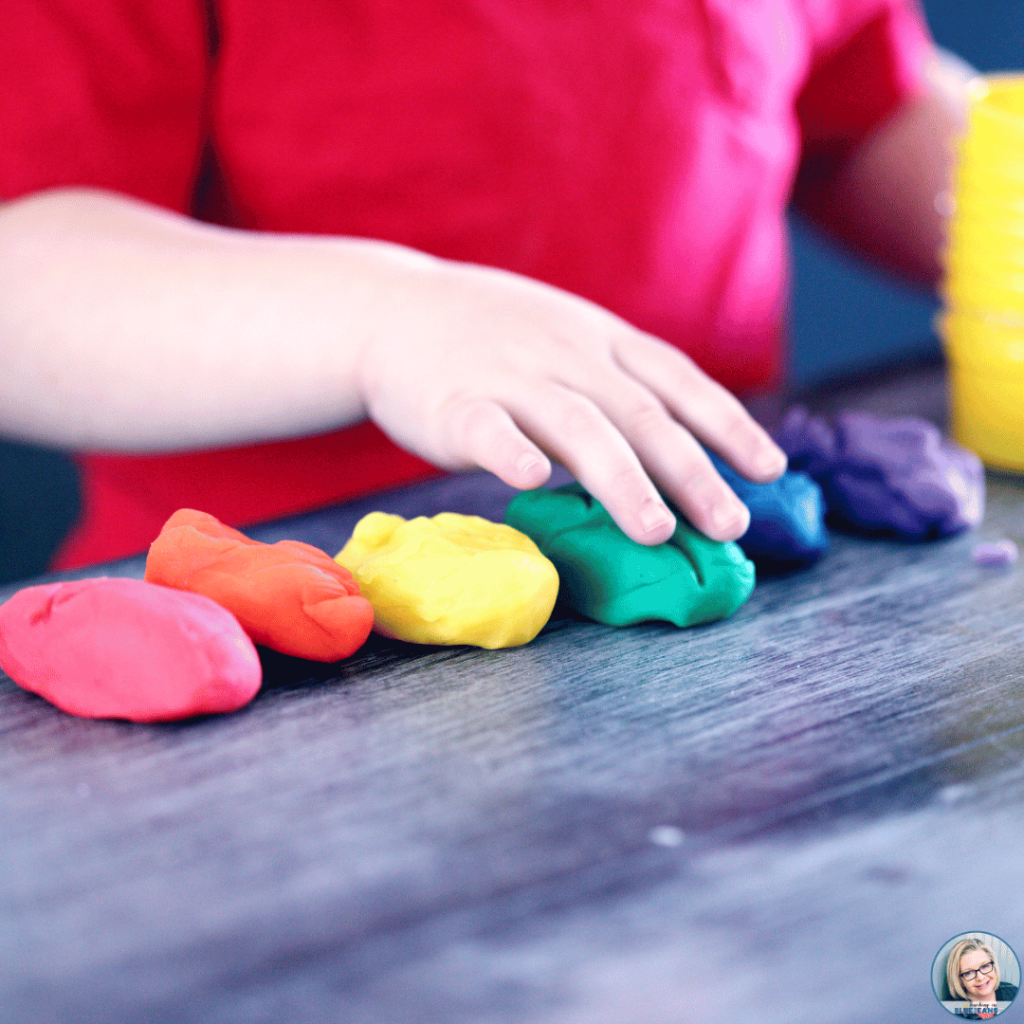
This activity would be a great way to introduce rulers! My students create different lengths of playdough “worms” and compare using rulers or non-standard units. I have them compare their “worm” to their neighbors’ “worm”, the length of their shoe, or the length of their desk.
Creating and comparing lengths builds measurement skills and introduces non-standard units of measure in a meaningful way.
This activity allows students to be creative. I let them make a variety of shapes in multiple colors. I then call out different patterns, such as “blue, blue, red” or “circle, line, circle, cube,” and have students build the pattern on their desk. This is an easy activity to spot check as you walk around the room!
Building patterns develops early algebraic thinking and helps students recognize order and predictability in math.

I usually provide toothpicks or chopsticks for this activity. My students love to see how high they can build their creations. I have them build basic 3D shapes (cubes, spheres, pyramids) with playdough and use the toothpicks to support their shapes and structures. If your school has 1:1 devices, this would be a chance for your students to watch videos of different structures to build and have them attempt it.
If my students are still not ready for 3D shapes, these pre-made shape cards also come in handy!
Constructing shapes builds understanding of geometric properties and the differences between 2D and 3D objects.
Building models is one of my favorite ways to use playdough in the classroom. I will assign my students model stages of a butterfly, frog, or plant life cycle to build out of playdough. When I use this as an introductory activity, I will give the stages listed out on a handout, but I have also used it as a formative assessment for students to demonstrate what they have learned.
Modeling life cycles supports scientific understanding by making abstract biological processes visual and tangible.
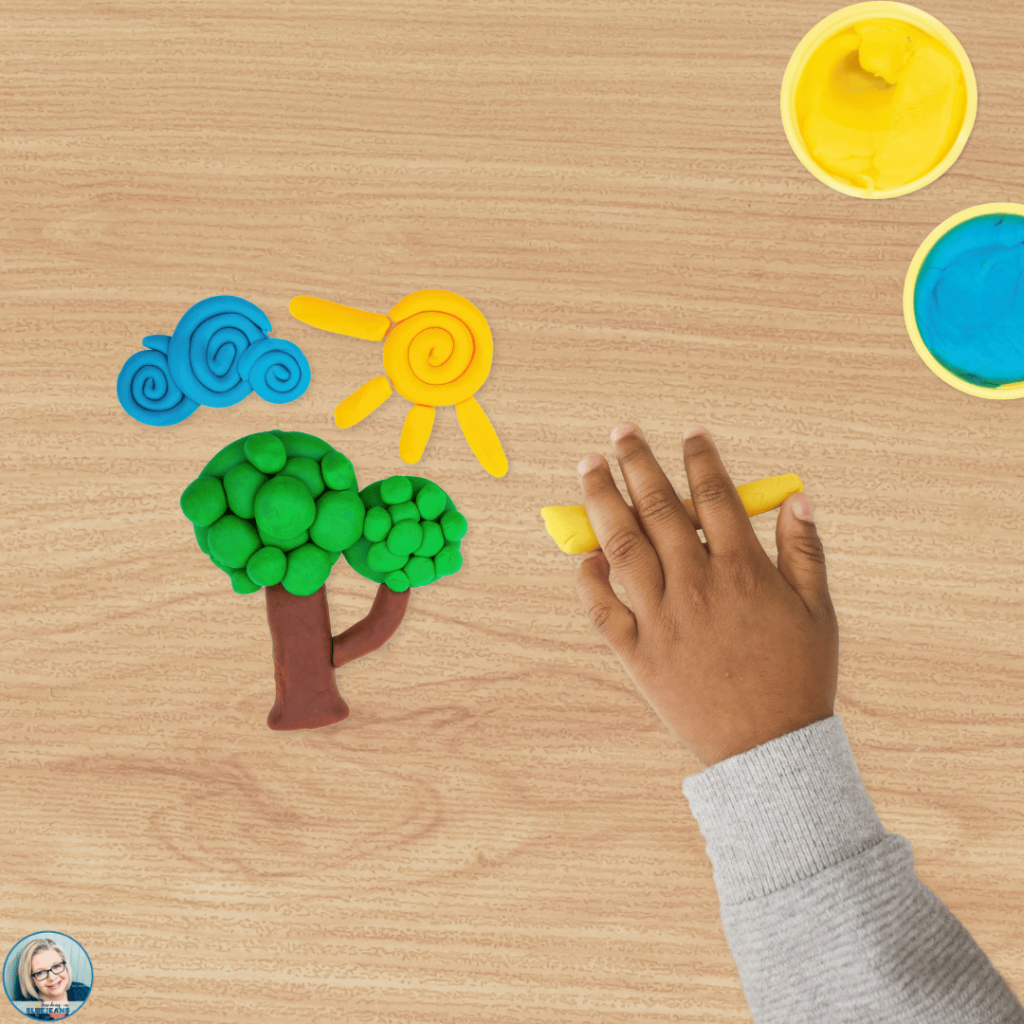
At the start of the day, as a whole class, we review the weather. I particularly like to use this activity on rainy days when we can’t play outside. Using the vocabulary we have been building from the start of the year, we build the weather cycles, such as rain going into the ground, sun coming up, moisture returning to clouds, etc. I simplify it and have students create the weather for the day, such as a sun and some clouds or clouds with raindrops.
Creating weather models helps students visualize different weather types and fosters science vocabulary development.
This playdough activity is always a hit. After learning about habits, I have students research the habitat of an animal of their choice. They have to find out the types of plants/ grass, food sources, water sources, etc., and then build a model. To simplify this activity, I will build a habit and then have my students create the animals that live in each. For example, I will build an ocean with seaweed and coral, and then my students will make fish, eels, starfish, etc.
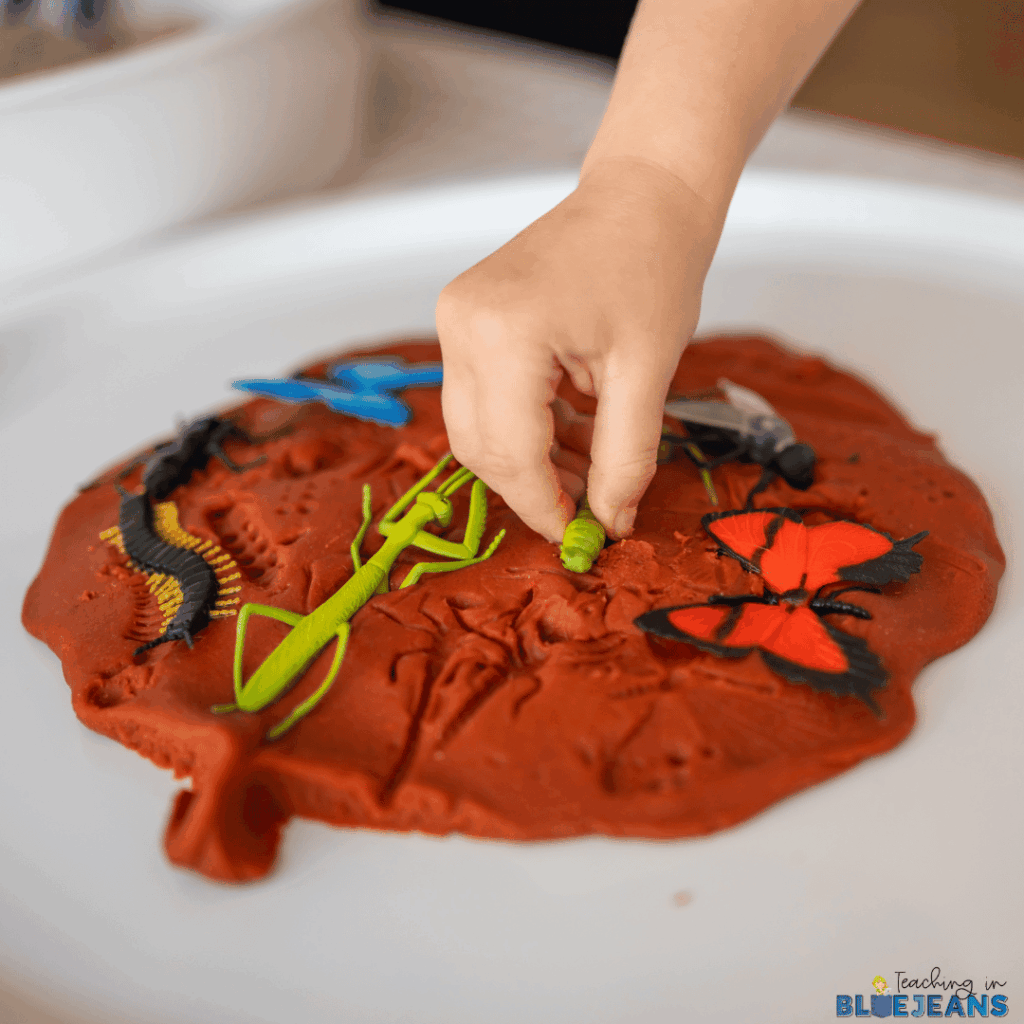
Building habitats allows students to connect science content with environmental awareness and animal needs.
This is one of my all-time favorite playdough activities! I take my students outside to collect different objects from nature, such as leaves, sticks, flowers, and rocks. We bring them back to class, and then students have a chance to roll out the playdough and make imprints of the different objects. I like to talk with the students about the different textures we see in the imprints and use different vocabulary words we have learned about when talking about nature.
Exploring textures and patterns through nature imprints builds observation skills and promotes early scientific inquiry.
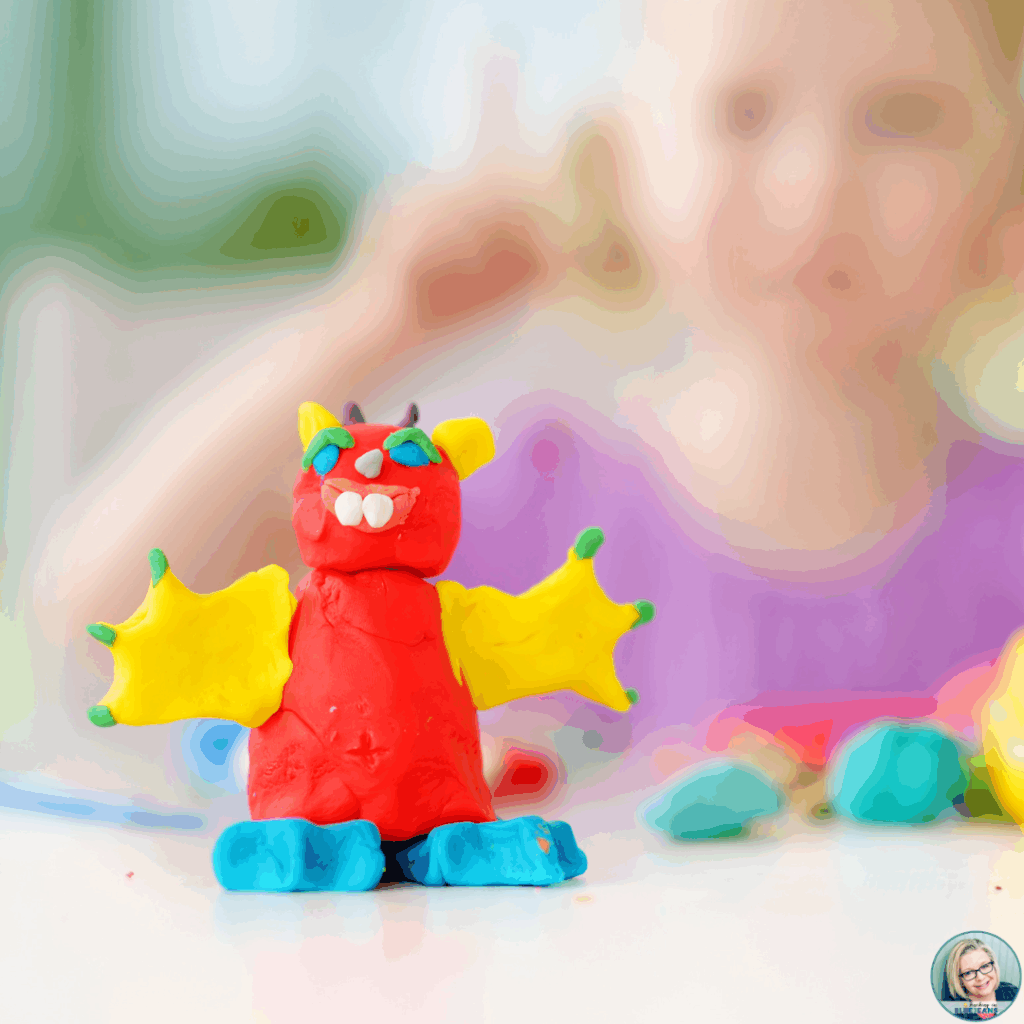
This activity is beneficial to both lower and upper elementary levels. It helps both levels of students demonstrate reading comprehension. I have my students sculpt characters, props, or scenes from a story we read, and then retell the story using the models. I have also had students do this with a book they have read independently at home for reading logs and then retell the story using their models. It is a great way for students to gain book suggestions.
Using playdough props for retelling strengthens comprehension, sequencing, and oral language development.
There are two ways I do this activity. I have sets of rhyming cards with words such as “cat” and “bat.”
The first way I do this activity is by having my students roll out two flat pieces of playdough. Then, once they draw a set of cards, they use letter stamps to create the word.
The second way I use this activity is by having students draw the rhyming cards and then create the objects they picked up.
Creating rhyming objects reinforces phonological awareness, which is a key predictor of reading success.
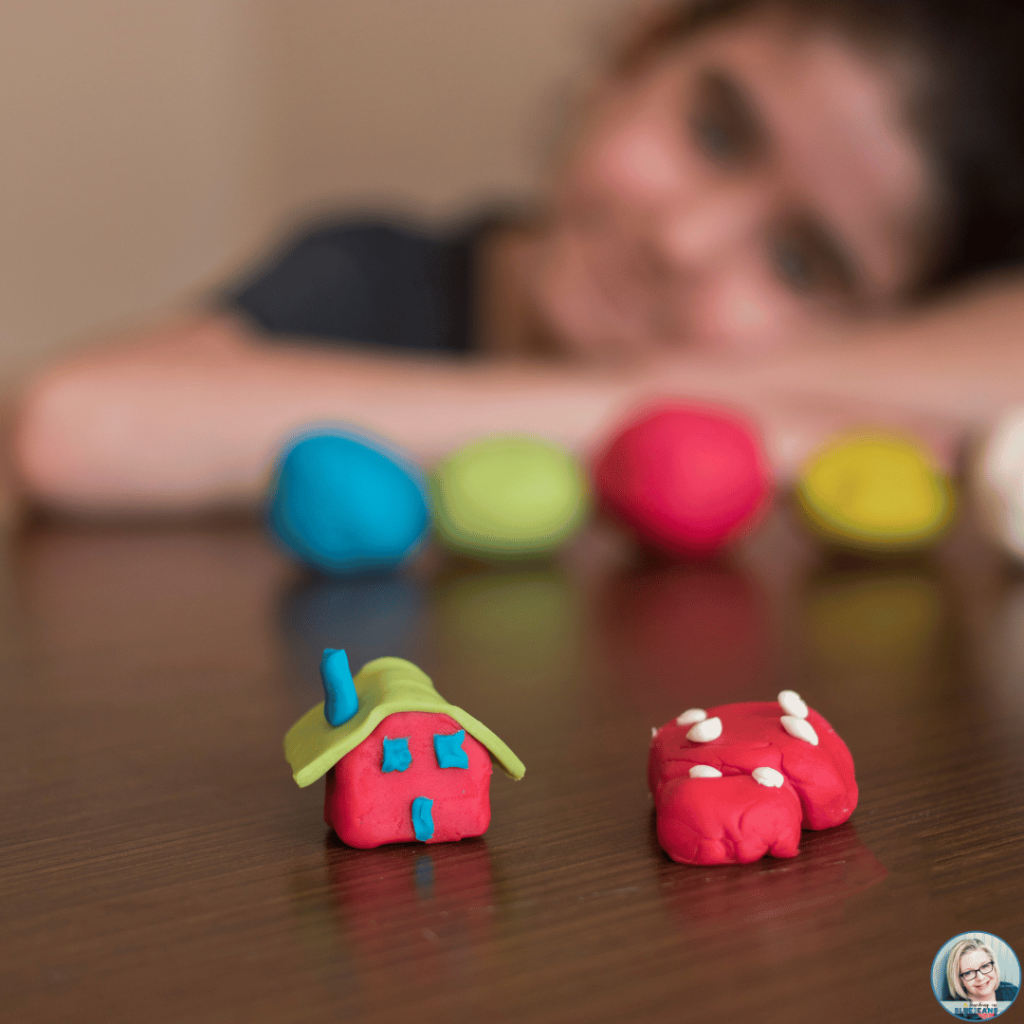
Another great way to incorporate playdough into stories is to have my students create key events in playdough and place them in order. This gives them the chance to be creative, act out after sitting still, and teach a peer about the story in their own words.
Sequencing story events helps students build narrative structure and supports comprehension skills.
Beware: This activity will make you laugh when you see what your students create. As a way to support SEL, I give my students a chance to create facial expressions using playdough to show different feelings, such as happy, sad, mad, or surprised. This activity can be used at any time! I have used it if I notice my students are not getting along or having a tough day, to fill time if we finish another activity early, or as a restorative activity between two students who disagreed during recess.
Creating faces that show emotions helps students identify and express feelings, supporting social-emotional learning.
Over the years, I have continually gone back to this activity because of how versatile it is. I have built mini scenes, such as a bakery, and my students create the baker, cupcakes, bread, etc. I have also had my students build their own scenes to demonstrate learning. Other examples might be a doctor with band-aids and a stethoscope, a firefighter with a truck and a firehose, or a teacher with a book and markers.
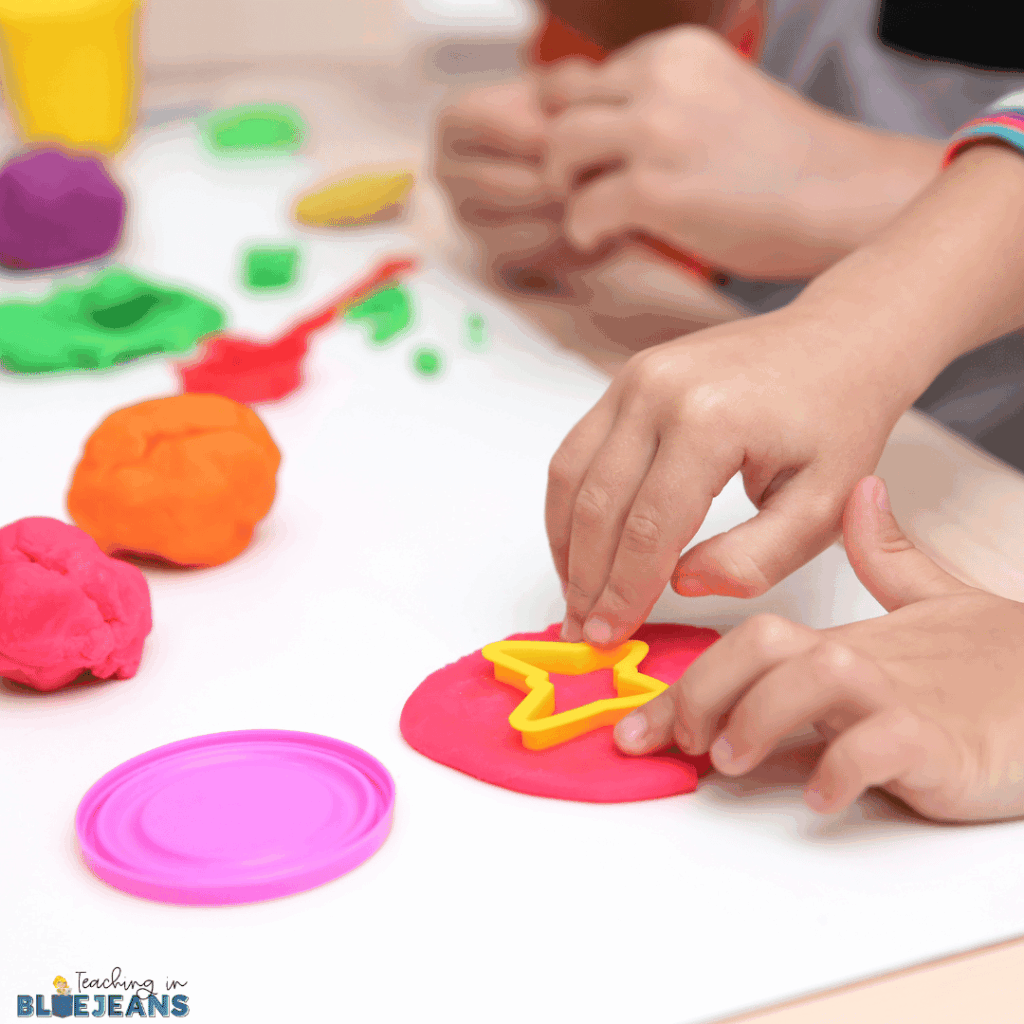
Role-playing community helpers builds awareness of roles in society while encouraging imaginative and cooperative play.
The last way I use playdough in my classroom is simple, free play. I provide themed playdough trays (cookie cutters, rollers, beads, straws, googly eyes) for open-ended, imaginative playtime. This is great during the different holidays. I love seeing how creative my students get, and it’s a center that can be used year-round.
Open-ended play fosters creativity and problem-solving, and allows students to explore their own ideas and interests.
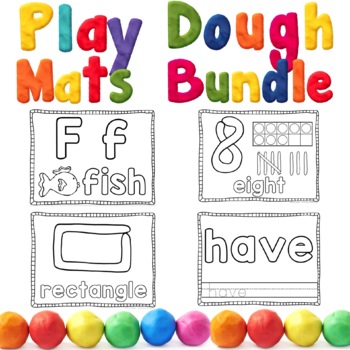
Hopefully, you are feeling confident about bringing playdough into your classroom! There are so many fun ways to incorporate playdough to help students learn in engaging ways. If you loved these ideas, check out my Playdough Mats Bundle for a quick way to get started!
If you loved the ideas in this post, these blog posts will offer you even more ideas!
Pin this on your favorite education Pinterest board! Then come back when you need some fun and fresh playdough activities for your classroom.