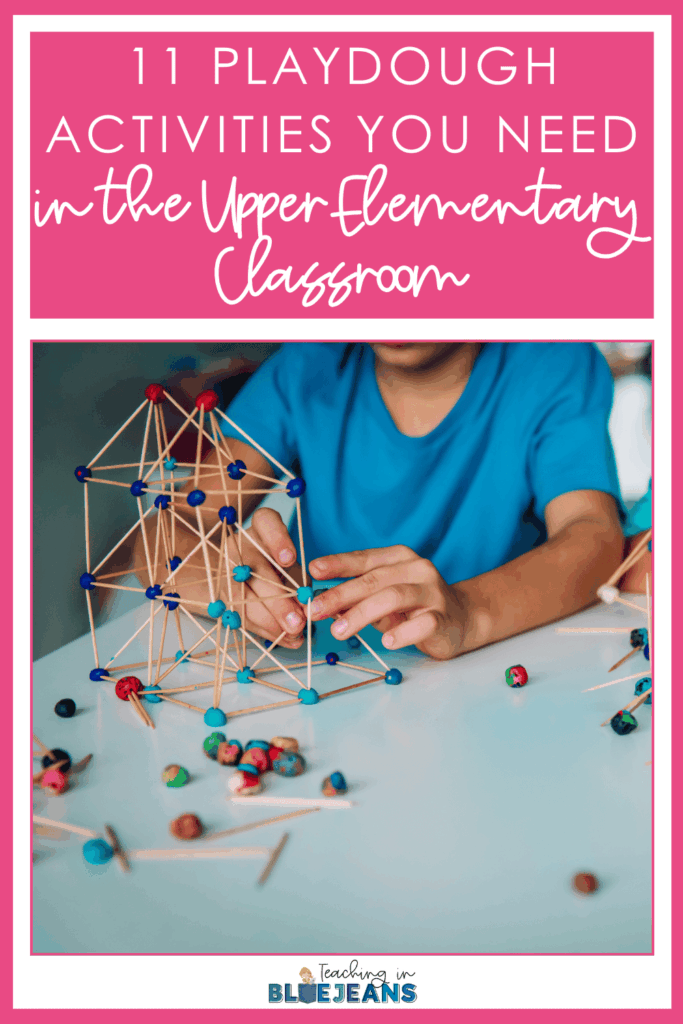




Let’s be real, when you hear “playdough,” your mind probably flashes to preschool tables and tiny fingers. But what if I told you this childhood classic could totally level up learning in your big kid classroom, too? Yep. Playdough is more than just squishy fun. It’s a sneaky little engagement booster, and it can be used to reinforce concepts across every subject. Bonus? Your upper elementary students will love it just as much (if not more!) than the littles. If your classroom is feeling a little worksheet-heavy lately, these playdough activities might be just what you need to add some hands-on joy to your week, without sacrificing standards. Here are five of my favorite ways to bring playdough into the upper elementary classroom.
Before we dive into all the ways to use playdough, let’s talk about why it deserves a spot in your upper elementary classroom in the first place. Sure, it’s fun and nostalgic, but it’s also a powerful teaching tool that brings big learning benefits. From boosting engagement to supporting academic and social-emotional skills, playdough pulls more than its weight. Here’s what makes it such a game-changer.
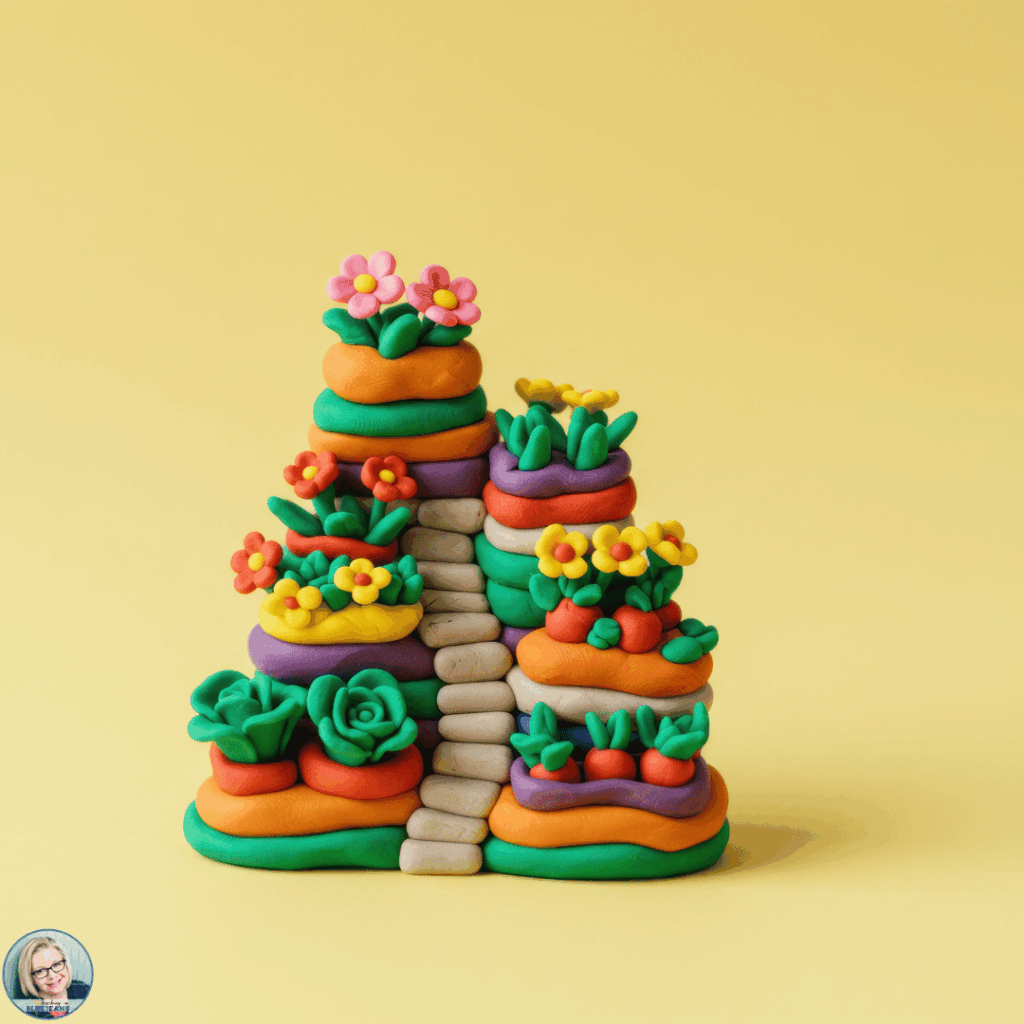
Playdough is hands-on, tactile, and totally immersive. When students roll, squish, shape, and build, they’re creating physical memories tied to academic concepts. That means they’re way more likely to remember what they just learned.
Playdough taps into tactile, visual, and kinesthetic learning all at once. Students aren’t just hearing or reading a concept, they’re shaping it with their hands and seeing it come to life. This kind of sensory-rich experience helps cement new information and reach learners who don’t thrive with traditional instruction.
Building with playdough isn’t just fun, it requires students to visualize, problem-solve, and reflect on what they know. That’s higher-order thinking disguised as play. Whether they’re modeling a math equation or crafting a historical landmark, they’re connecting the dots in new and creative ways.
When students use playdough in pairs or small groups, they naturally start talking about the task, their thinking, and the choices they’re making. This opens the door for academic discussion, peer teaching, and practicing those ever-important social skills like turn-taking and constructive feedback.
By upper elementary, we don’t always prioritize fine motor development, but many students still need it. Playdough gives them the chance to build hand strength, finger dexterity, and coordination in an age-appropriate, meaningful way. Whether they’re shaping vocabulary words or creating historical landmarks, they’re getting motor practice without the babyish feel.
Playdough activities give students a calm, creative outlet that promotes focus and emotional regulation. When used in group tasks, it fosters collaboration, turn-taking, and respectful feedback, all while building a classroom culture where learning feels safe and joyful.
Playdough is forgiving. If something doesn’t work out, students can simply squish it and start again, no erasers or red Xs involved. This makes it the perfect medium for students who struggle with perfectionism or are hesitant to participate. It builds confidence through exploration.
No matter a student’s language, background, or learning profile, playdough is easy to use and adapt. It levels the playing field, offering a low-risk, high-engagement entry point for every learner.

Hear me out: when students are fully engaged with their hands, they’re far less likely to be off-task with their mouths or bodies. Playdough has a built-in calming effect, and when structured well, it leads to quieter, more focused work time. It’s an easy win for transitions, early finishers, or those “extra squirrely” days.
There’s just something joyful about playdough. It invites creativity, nostalgia, and a sense of play. In a world of testing and pressure, using playdough tells students that it’s okay to have fun while learning. That little pop of novelty can transform a classroom’s vibe, helping students feel more relaxed, more willing to take risks, and more connected to the experience.
Ready to put that playdough to work? Here are several flexible, repeatable ways to use it in your classroom that will keep your kids engaged and further your academic goals.
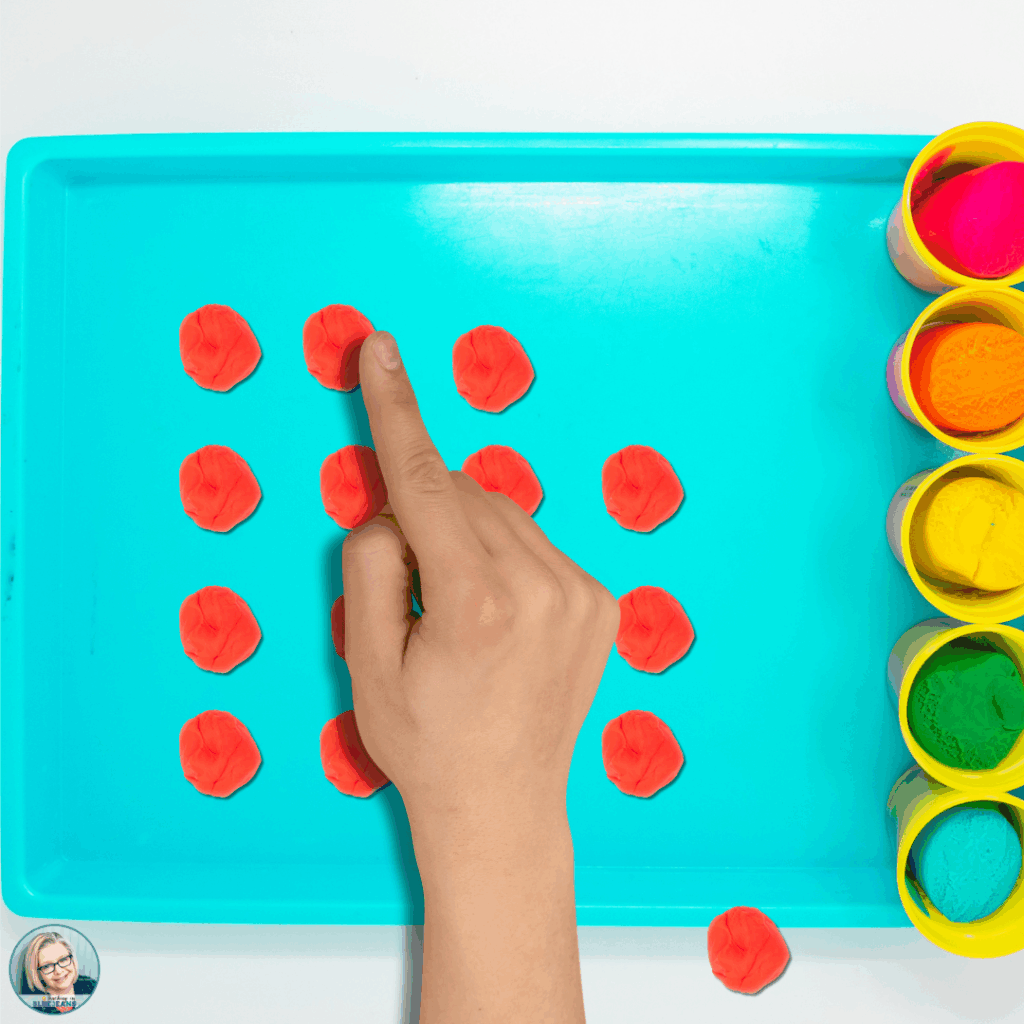
Playdough is the ultimate customizable manipulative. Roll it, cut it, shape it – it becomes whatever you need! Use it to model math concepts like fractions, area, and multiplication arrays. Bonus: it’s a lot more fun than base-ten blocks and traditional counters.
Let students build a scene, object, or character with playdough, and then write about it! This is perfect for creative writing, descriptive paragraphs, or even explanatory texts.
Have students roll out playdough “snakes” and shape them into their spelling or vocabulary words. They can also stamp letters into playdough using letter tools or even press-on alphabet beads. For upper elementary students, this can be a kinesthetic alternative to traditional word work that still feels playful but isn’t babyish. Bonus: it builds muscle memory, especially for tricky spelling patterns.
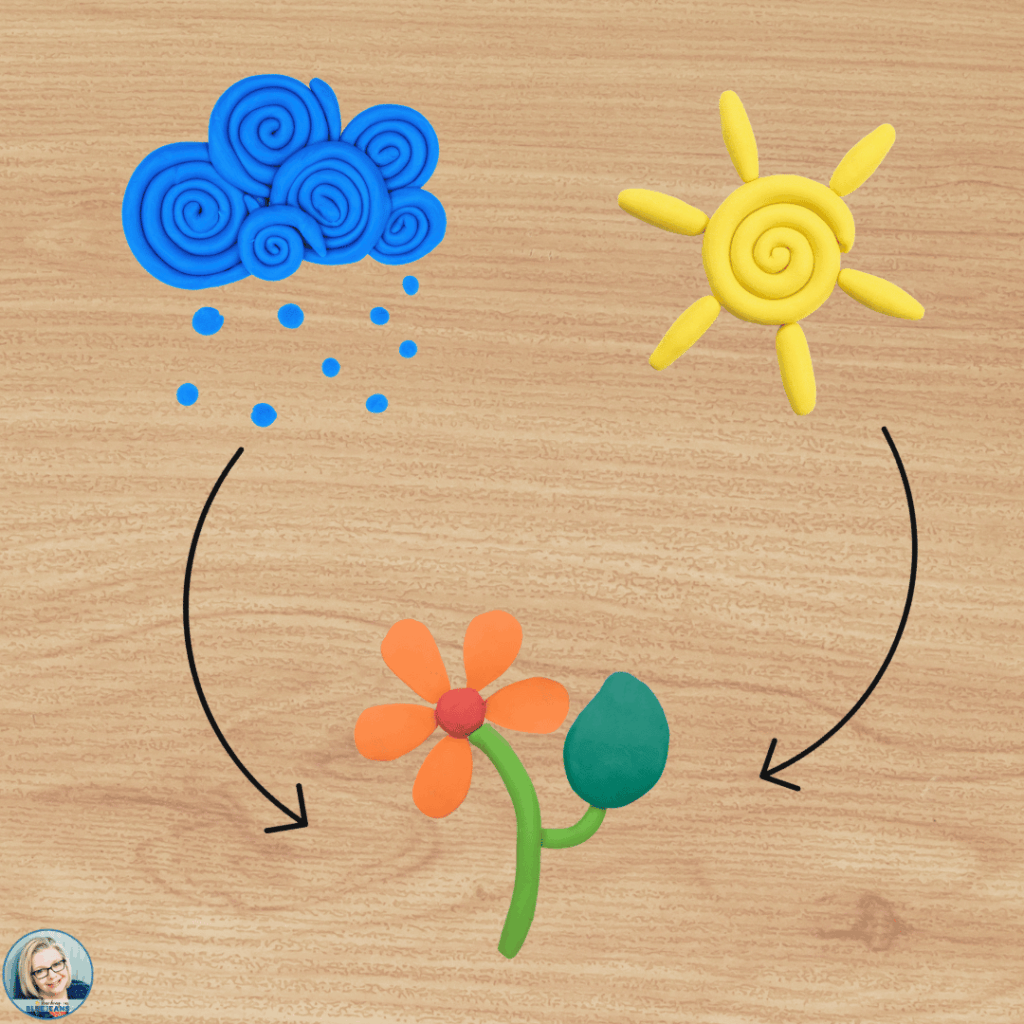
When teaching abstract or content-heavy topics in science or social studies, give students the opportunity to build it. Whether it’s a food chain or a historical event, making a physical model helps the concepts click.
Playdough is perfect for showing change over time or multi-step processes in science. Think about modeling the water cycle or the phases of the moon. Students can work in small groups to build the full process, label each step, and explain how one leads to the next. It’s a powerful tool for visual learners and adds clarity to tricky science standards.
Want to make your anchor charts a little more interactive? Have students create small playdough pieces to contribute to class visuals. For example, in a science unit on animals, they could each make an animal that fits into a classification chart. In math, they might create shapes or fraction models. These tactile, student-made pieces can be added to bulletin boards or saved for reference during the unit.
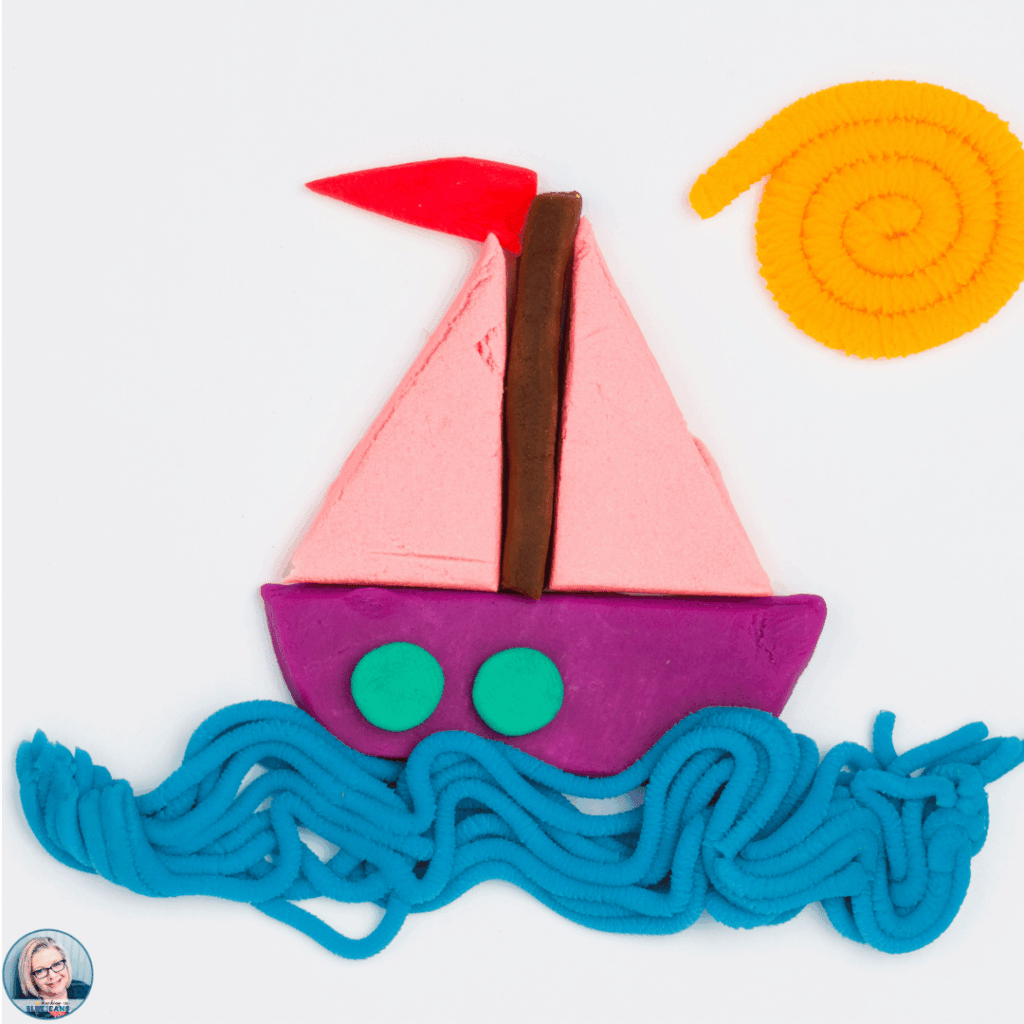
Playdough is a surprisingly powerful tool for formative assessment. Ask students to model vocabulary words, demonstrate understanding of a concept, or summarize what they’ve learned – all in dough form.
Instead of just summarizing a story or history lesson in writing, have students build it first. Students can use playdough to recreate the setting, characters, and major scenes in sequence. This makes an excellent comprehension check for reading or social studies and helps students internalize timelines and cause/effect relationships. Plus, it encourages collaboration and verbal retelling if done in small groups.

Bring STEM into your classroom by having students use playdough to design a new invention, model a machine, or prototype a product idea. You can tie this into units on simple machines, entrepreneurship, or even environmental science. It’s creative thinking and problem-solving in action, plus it builds perseverance and communication skills.
Playdough is the perfect low-pressure tool for beginning-of-year or team-building activities. Ask students to sculpt something that represents them – their favorite hobby, a place they love, or a personal goal. Then give time for students to share and explain their creations. It’s a fun way to learn about each other, ease anxiety, and create a welcoming classroom culture.
Here’s one that’s especially helpful in ELA and SEL: use playdough to help students take on different points of view. This could be a character in a book, a figure in history, or even an emotion.
I don’t know about you, but sometimes I just love a good example to help me wrap my head around something. Here are some specific uses for playdough that connect with upper elementary standards.
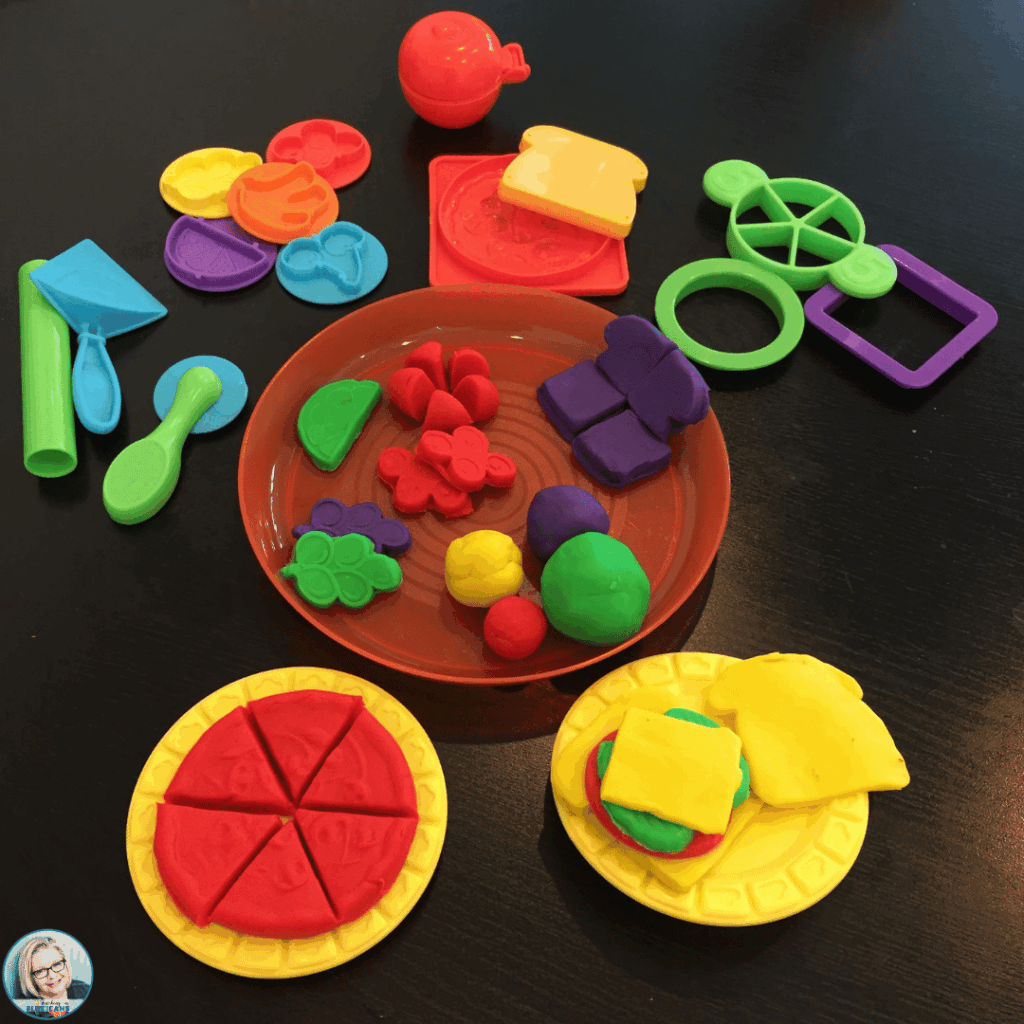
Tired of hearing “I just don’t get fractions!”? Playdough to the rescue. Grab a handful of dough and have students roll it into a pizza. Then, they divide it into equal parts – halves, thirds, fourths, eighths, whatever you’re working on. This visual and tactile approach makes abstract ideas click.
Let students slice their pizzas, remove sections, and label each part. You’ll hear “Ohhh, now I get it!” more than once. Bonus: it’s a great formative check-in without a worksheet in sight.
Story problems are everywhere in math, but sometimes students struggle with understanding what is happening and how it applies to math concepts. Playdough to the rescue! Have students use playdough to sculpt the “characters” or items in their word problems—animals, people, objects, you name it. Once they’ve built their visual, they can use their sculptures to act out what is happening before putting it into math terms.
For example, a student might have this problem: “There are 3 dogs and 8 bones. If each dog gets an equal number of bones, how many will they each receive? They could sculpt 3 dogs and 8 bones, and then start handing out the bones to each dog. Students will be able to see the concept of division in action as they find their answer.
Instead of just identifying angles in a workbook, let students build them! Give students a task card with an angle type—acute, obtuse, right, straight—and have them create each one with playdough. This tactile approach makes measuring angles click, especially for visual and kinesthetic learners.
Level it up by adding protractors and having students:
Reading comprehension meets sculpture in this creative twist. After a read-aloud or chapter from a novel, challenge students to build scenes from the story using playdough. Have them create 3–5 key moments, arrange them in order, and then retell the story based on what they built. It’s visual storytelling, comprehension, sequencing, and speaking skills all rolled into one.
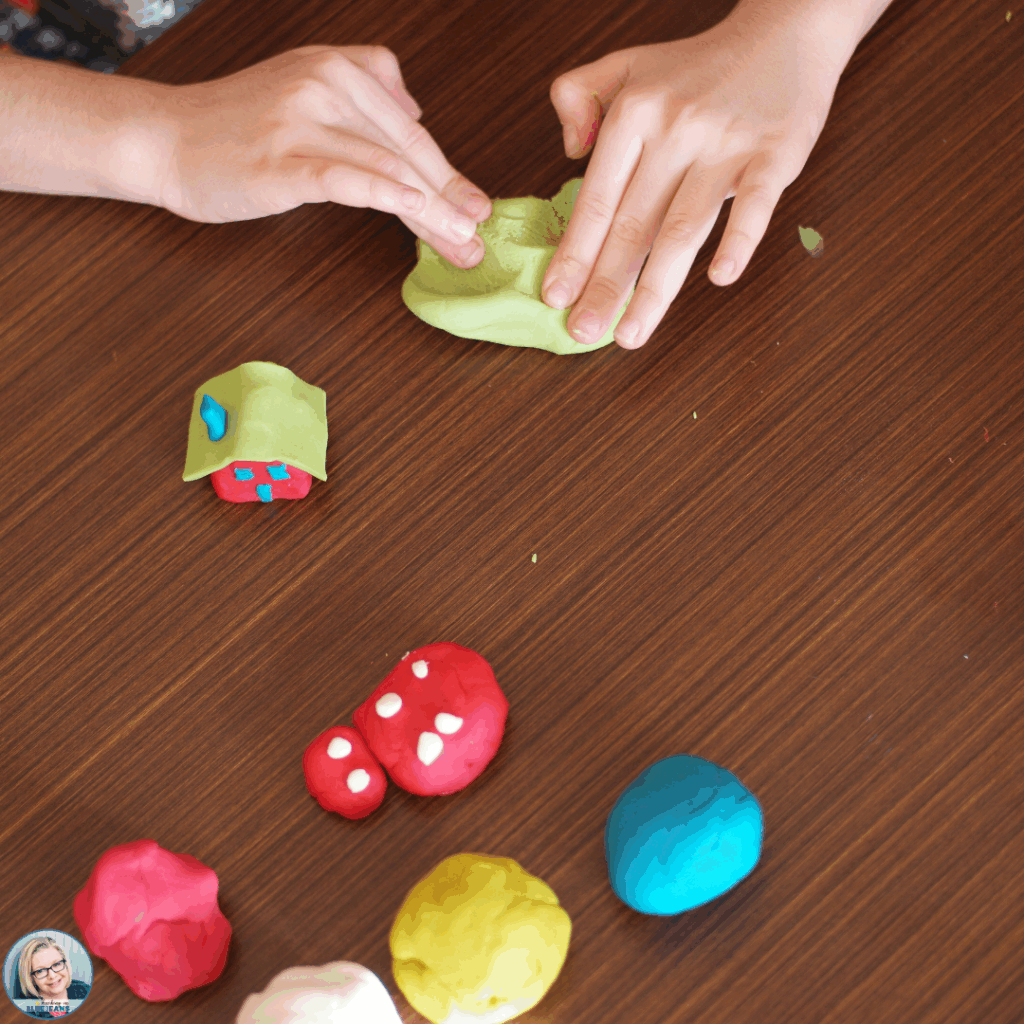
This one gets really fun. Assign students a part of speech (noun, verb, adjective, etc.) and have them build something that represents it:
When they are done, have students write silly sentences using their models!
Give students a list of figurative language types (simile, metaphor, hyperbole, personification) and have them sculpt visual representations of them:
Then, students explain the meaning behind their model and identify the type of figurative language. It’s a great anchor for understanding abstract expressions.
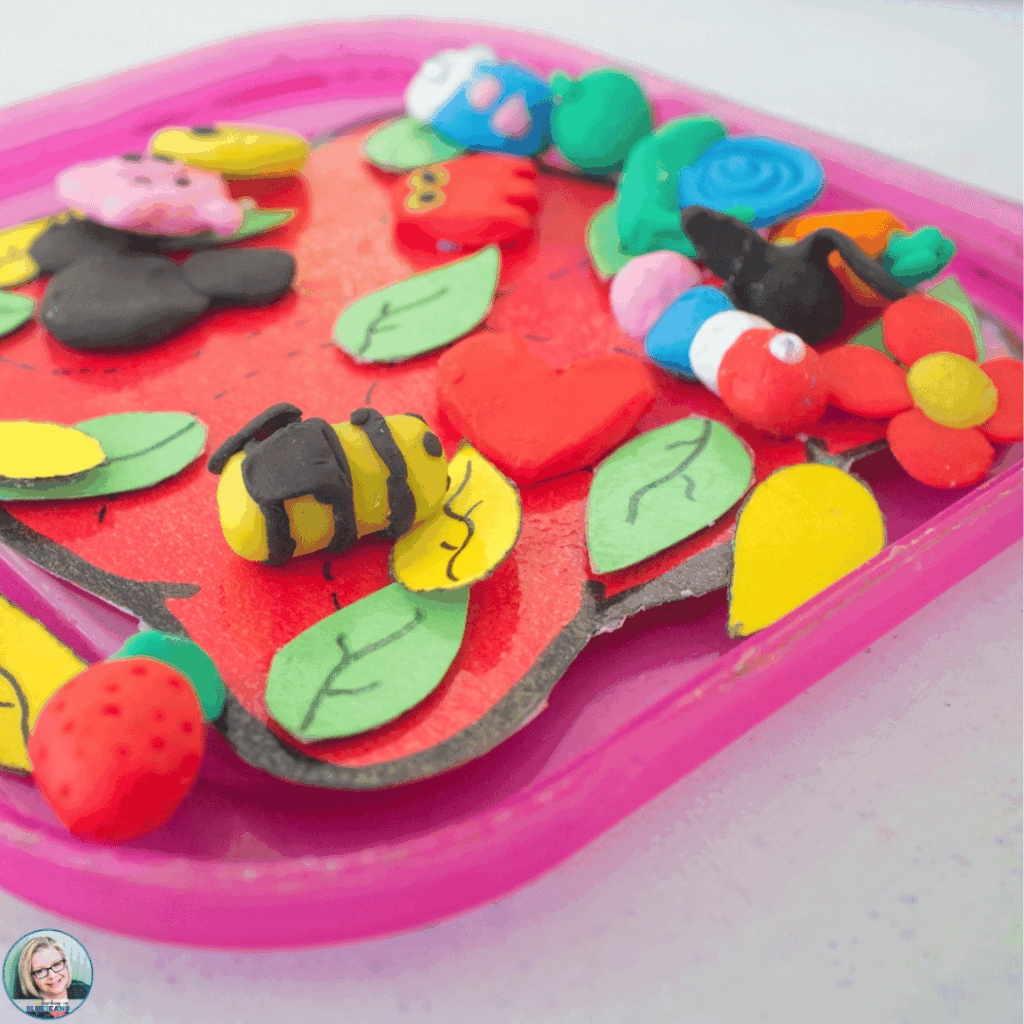
When you’re teaching ecosystems or food chains, playdough can help bring those connections to life. Students sculpt producers, consumers, and predators from a specific biome and arrange them in the correct order. Then, take it one step further and have students explain their models, label the organisms, and even write cause-and-effect scenarios (e.g., “What happens if the frog disappears?”). Hello, science + writing integration!
Visualize Vocabulary Words
Give students a list of new words from your current unit (like “erosion” or “magnetism”). Challenge them to pick one and represent it with playdough. Then, they explain their creation with a quick partner share. Before destroying those creations, take a picture using a tablet or other classroom device so students can print them out and add them to their science notebooks.
Give students a hands-on way to visualize the structure of our planet by building a playdough cross-section of the Earth’s layers. Students use different colors to represent the inner core, outer core, mantle, and crust, then slice their model in half to show the internal layers.
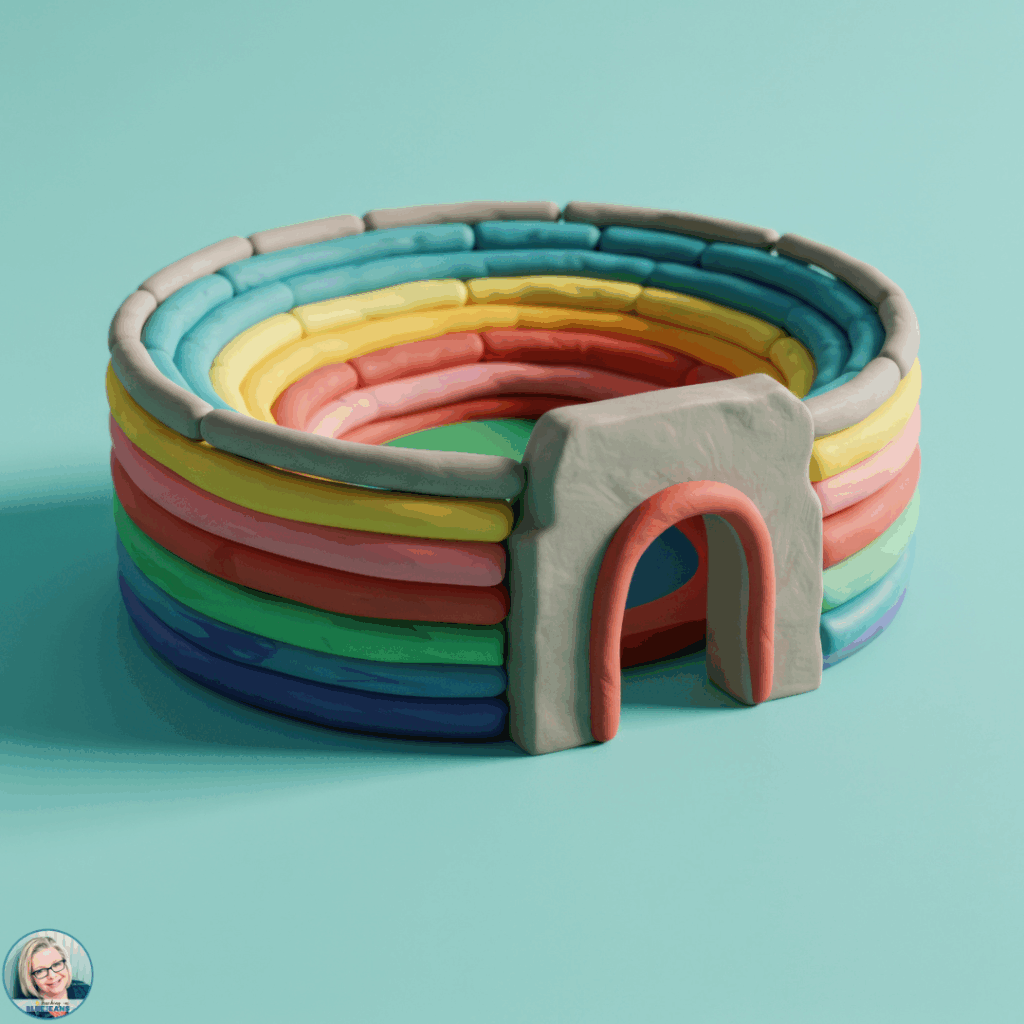
Students can use playdough to recreate historical artifacts or scenes they’ve learned about during a unit. For example, after studying early American history, students might sculpt the Liberty Bell, a pioneer wagon, or a colonial village. Once completed, they write a short explanation of what they created and how it connects to what they’ve learned. This not only deepens their understanding but also reinforces key historical vocabulary and concepts.
Playdough is a powerful tool for helping students visualize landforms and geography. After exploring different physical features like mountains, valleys, rivers, and plateaus, students can build 3D topographic maps using different playdough colors and textures to represent each feature. Students then label their maps and write a short paragraph describing the region, making it a cross-curricular connection between geography and descriptive writing.
To explore world cultures, have students use playdough to create an artifact, food item, or symbol from a culture they are studying. For example, a student learning about Japan might sculpt sushi or a traditional fan, while another studying Mexico might make a miniature piñata or sombrero. As part of the activity, students can research the significance of their item and share a short oral or written explanation with the class. This approach allows students to engage with cultural traditions in a hands-on, respectful way while promoting curiosity, global awareness, and cross-cultural understanding.
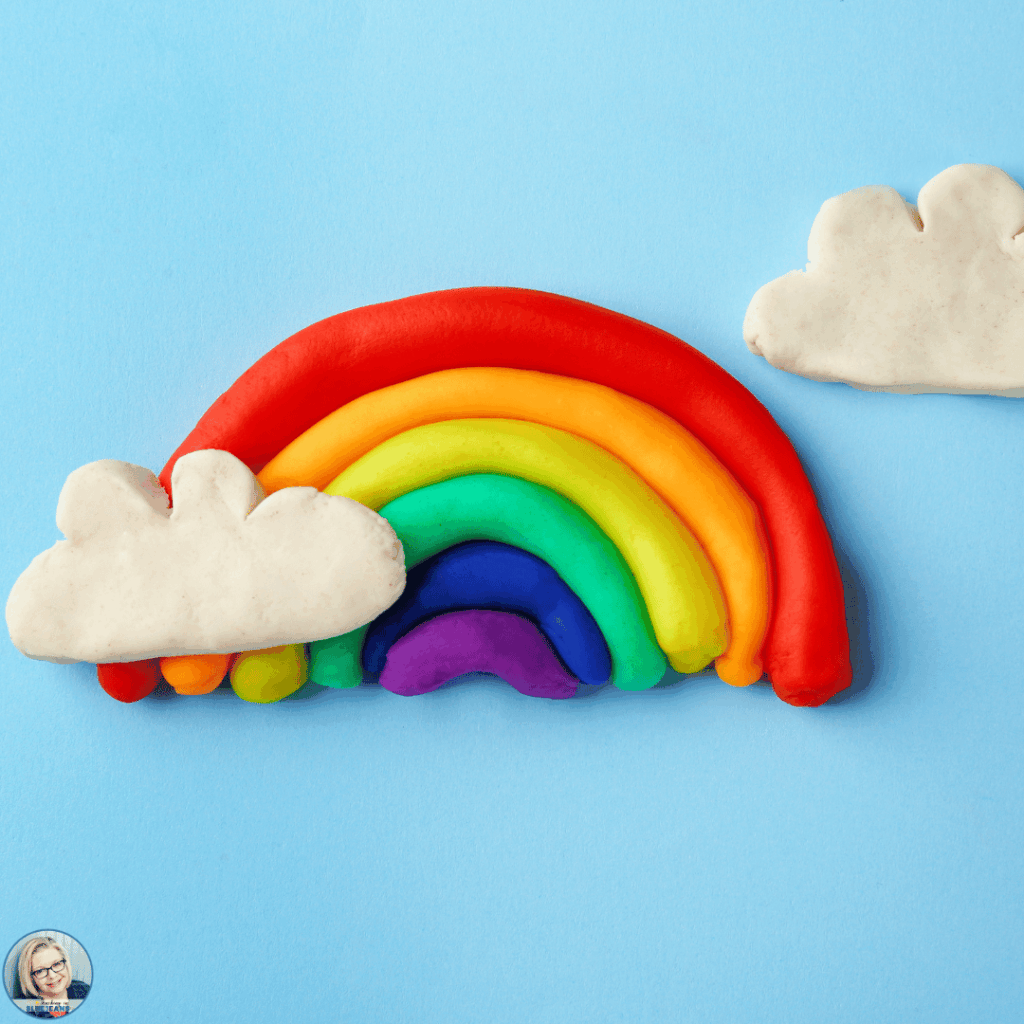
Have students start a weekly emotion journal where they first use playdough to sculpt a face or object that represents how they’re feeling. Once their sculpture is complete, they write a short journal entry describing the emotion, what caused it, and how they handled it. This helps students build emotional awareness and gives them a concrete, creative outlet for reflection.
Let students choose a color that represents how they feel, and create a shape or sculpture that shows that emotion. They can journal or share about what they made, how they’re feeling, and what helps them manage tough emotions. It’s a low-pressure, high-impact way to make space for emotional regulation. And. . . it just might become your students’ favorite part of the day or week.
Each student uses playdough to sculpt something that represents one of their personal strengths, like a book for being a good reader, a heart for kindness, or a tree for patience. After sculpting, they share their strength with the class and explain why they chose it. This boosts self-confidence and helps students recognize the value of diverse abilities in the classroom community.
Upper elementary students may be getting older, but that doesn’t mean they are too old for hands-on learning. These playdough activities are easy to prep, highly engaging, and flexible enough to adapt to different subjects and skill levels.
So next time your class needs a boost, or you’re just ready to shake things up, grab the playdough and let the creativity (and learning) begin!
Want even more hands-on ideas? Check out:
Pin this to your favorite classroom Pinterest board so you can come back when you are looking for engaging playdough activities (and more!) to use with your upper elementary students.