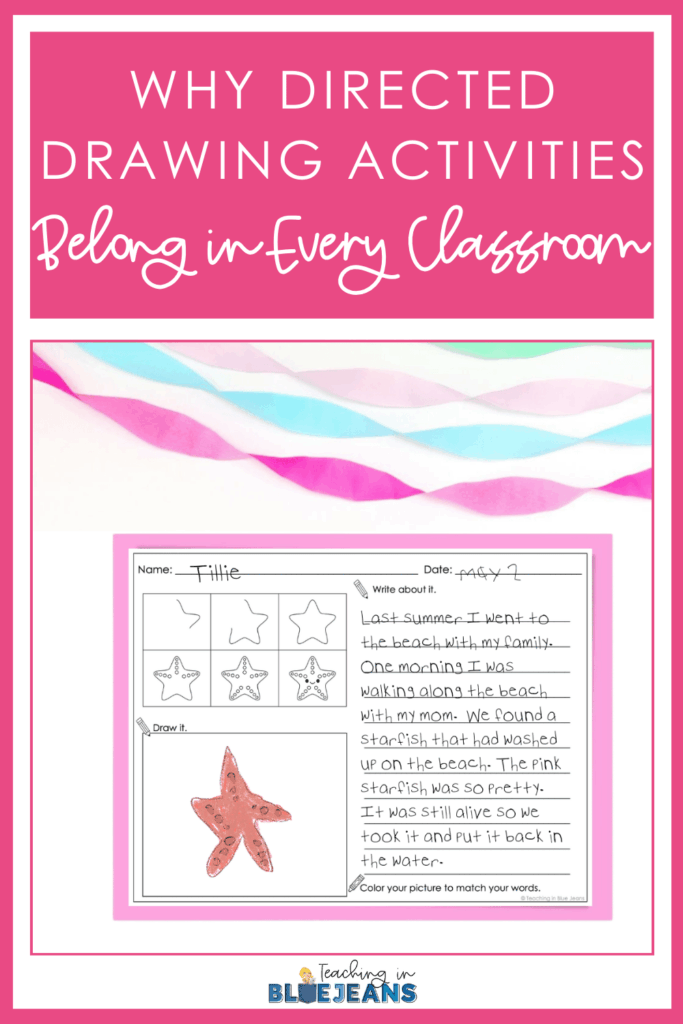







If you’ve ever watched your students light up as they proudly show off a drawing they never thought they could make, you already know, directed drawing is more than just a fun activity. It’s a powerful teaching tool, especially in the primary grades. If you’re in a K-2 classroom, directed drawing can support key academic and developmental skills in ways that are engaging, meaningful, and downright joyful. Let’s take a look at why this simple routine deserves a regular spot in your weekly lesson plans.

Directed drawing is a step-by-step drawing activity where the teacher models how to draw a picture, and students follow along, one line or shape at a time. The focus isn’t on artistic perfection. It’s on building confidence, following directions, and helping students see that they can draw!
Each student ends up with their own version of the same subject (like an animal, character, or seasonal item), but every drawing is still unique. This makes directed drawing a perfect blend of structure and creativity, which is something especially valuable in the early childhood and primary years.
There are a number of reasons that drawing activities work so well in the primary classroom. Here are some of the reasons I have discovered over the years of using these activities with primary learners.

Before students can write letters and numbers fluidly, they need to master basic lines, shapes, and strokes. This includes curves, diagonal lines, and straight lines.
Directed drawing naturally incorporates these foundational motor movements in a low-pressure, creative format. As students follow step-by-step instructions, they’re practicing pencil control and stroke patterns in a way that feels like art, not work. Trust me, they’ll be having so much fun they’ll forget they’re learning!
When children observe a teacher-led demonstration and then replicate each part on their own paper, they are strengthening their ability to visually track, interpret, and translate what they see into precise motor movements. This hand-eye coordination is essential not only for writing but for many classroom tasks, too. From cutting to playing educational games, it definitely matters!

In directed drawing, students often draw shapes and lines that extend across the page. These movements help develop bilateral coordination and strengthen brain connections between the left and right hemispheres. This is important for both physical development and literacy skills.
One of the most magical benefits of directed drawing is seeing a child’s face light up with pride. Step-by-step guidance helps every student feel successful, while still leaving room for personal touches, color choices, and creative flair.
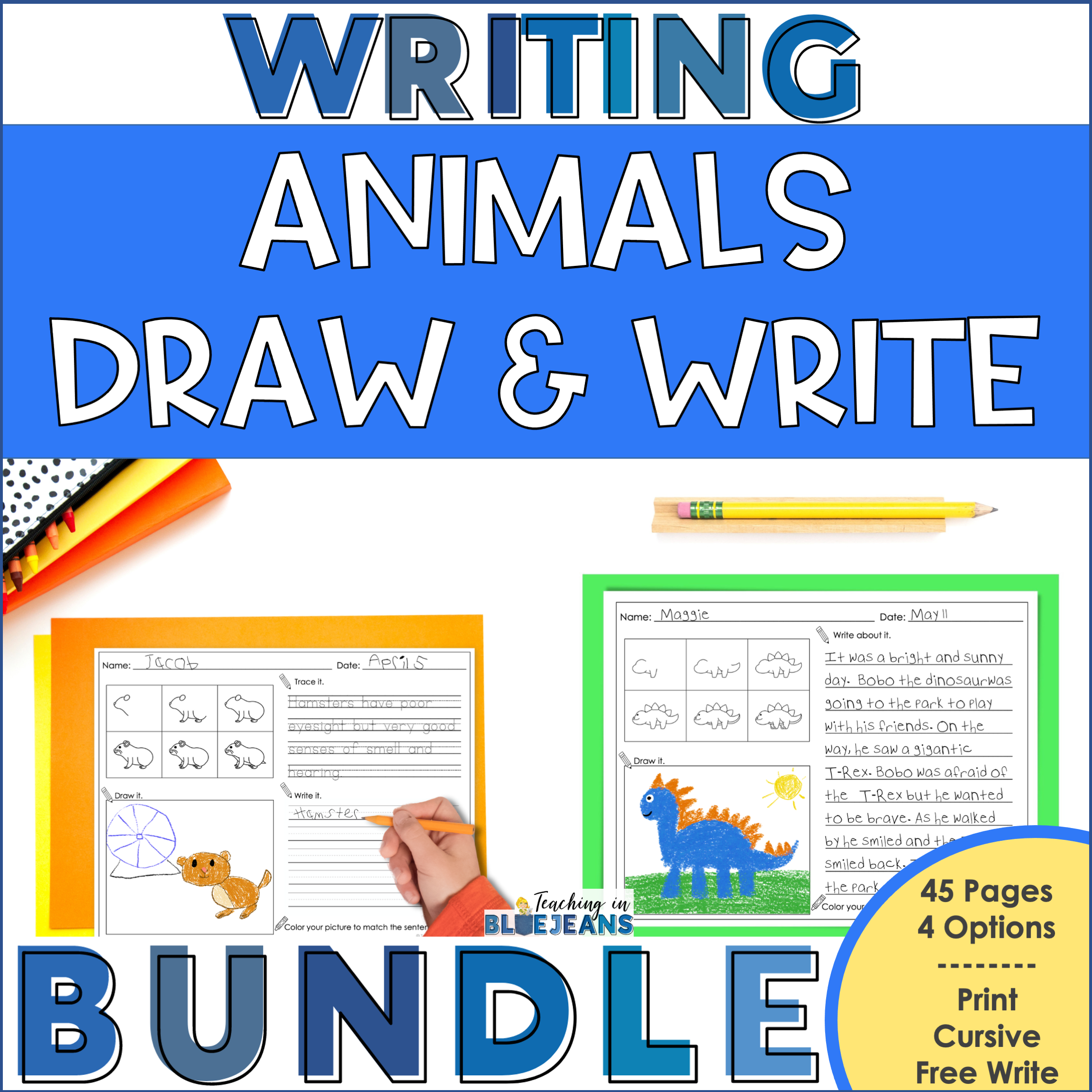
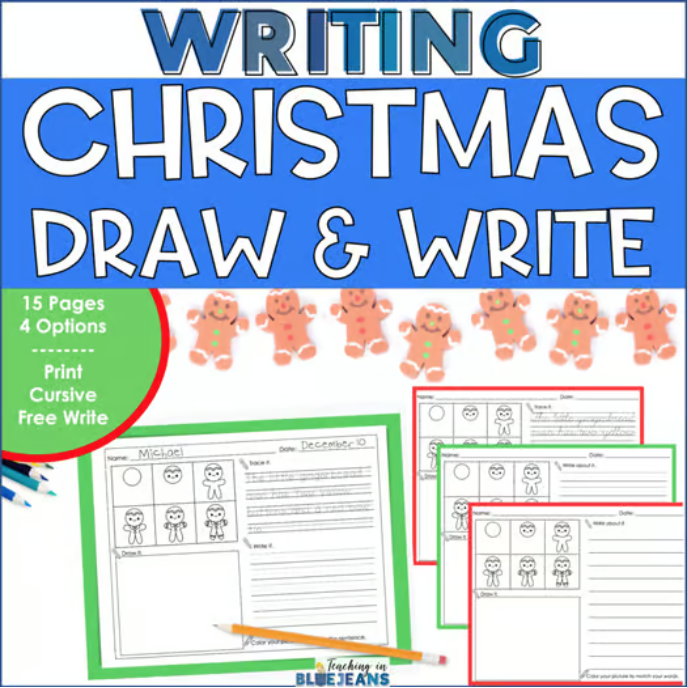
Want to take it a step further? Combine directed drawing with handwriting, sentence writing, or creative storytelling! That’s exactly what I’ve done in these classroom-ready resources, which are perfect for morning work, writing centers, or early finisher activities. Here’s a peek at the many different options!

And if you prefer print books for easy grab-and-go centers, sub plans, or home learning workbooks, you can now grab the Print Handwriting Directed Drawing Books on Amazon. Shop them here!
There are so many fun ways to use drawing activities in the classroom. Give one of these ideas a try in your room!

Kick off the morning with calm and purpose by setting up a directed drawing page as part of your morning tubs or bell work. Students come in, unpack, and immediately begin focusing on their drawing. This is a great way to help create a peaceful start to the day. It also gives you time to take attendance, check folders, and greet students individually while the rest of the class is engaged. As a bonus, it sets the tone for a day full of focus and creativity!
Pair directed drawing with a simple writing task to create a powerful literacy station. Once students complete their drawing, they can write a sentence, label their picture, or respond to a writing prompt. Many of the resources mentioned above include both tracing and sentence writing options, making it easy to differentiate for emerging and confident writers.
You know those kids who always finish early? Directed drawing is the perfect meaningful “I’m done” option. Keep a basket of printed pages ready to go so early finishers can grab one without interrupting you or the rest of the class. They’ll stay engaged while reinforcing fine motor and writing skills. Plus, it’s a FUN activity they will actually look forward to!

Need a low-prep, high-engagement option for your next sub day? Directed drawing to the rescue! Simply leave a stack of printed pages from one of your themed resources along with some crayons, pencils, and writing tools. Clear instructions and the structured nature of directed drawing make it easy for a substitute to lead, and your students will love the activity.
Project the step-by-step drawing directions on a smartboard while you model the process. This gives students the opportunity to follow along in real time. Add in vocabulary words, story elements (if connected to a theme or holiday), or even a short story they can write based on their drawing to build in even more cross-curricular value.

Use drawing activities to match your weekly or monthly themes, like apples in September, pumpkins in October, or penguins in winter. It’s a fun way to reinforce vocabulary and keep your lessons feeling fresh. Students can color, label, and hang their creations for a beautiful student-made display that builds classroom pride.
Looking for a low-stress homework option that builds skills without a battle? Send home a directed drawing and writing sheet once a week. Kids will love showing off their work to their families, and you’ll be giving them meaningful pencil practice at home without relying on repetitive worksheets.

Directed drawing might seem like a fun filler at first glance, but the truth is, it’s secretly skill-building gold. When you choose activities that blend drawing, handwriting, and writing, you’re helping your students grow in more ways than one.
Whether you’re focusing on fine motor development, classroom confidence, or building early literacy, directed drawing is a joyful, purposeful addition to any primary classroom. Don’t forget, friend, you can find all of the printable directed drawing activities in my store, as well as the workbooks, right here on Amazon!
Be sure to check out these posts with more tips and ideas for our young learners:
Make sure to pin this post on Pinterest so that you can come back to it when you’re ready to try these activities in your classroom!