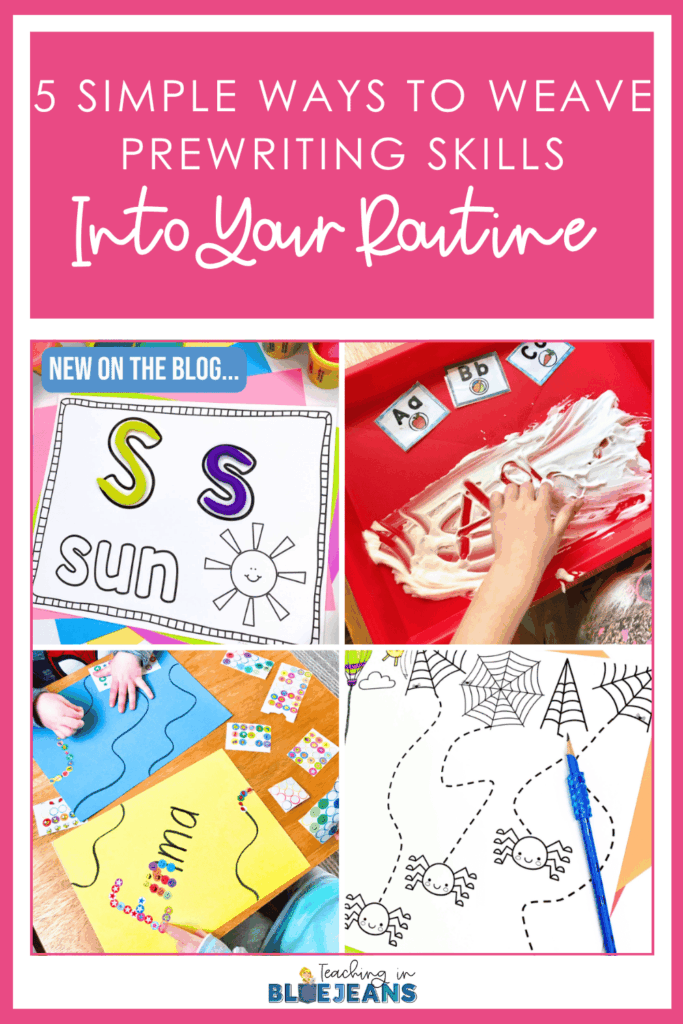



I think it’s fairly safe to say that watching students become independent and confident writers is an end-game goal for all teachers in early elementary classrooms. But long before any child can start mastering the formation of letters and numbers, comes the practice of prewriting skills! If you’re wondering how to incorporate prewriting activities into your daily lessons, you’re in the right place! Today we’re talking about simple, and effective ways to focus on this important skill!
Prewriting skills are the fundamental starting point for any young learner ready to embark on the path to writing. Often in early education classrooms, children are excited to learn just about anything that puts them in the driver’s seat. What I mean by this, is that providing opportunities for your students to develop their skill set in a hands-on, child-centered fashion will, in turn, produce amazing student engagement and participation in these key skills.
There are so many ways to implement prewriting practice in your classroom. This doesn’t have to be a lengthy or complicated lesson. Instead, think of it as something you naturally weave into the day. When we find ways to add prewriting activities to the daily routine, you’ll end up offering many more opportunities for students to practice regularly! Any activities that get your children to strengthen their hands, exercise their fine-motor muscles, and practice hand-eye coordination are great! Ideas such as drawing, painting, lacing, puzzles, and beading are all great places to start. Incorporating these activities can help develop these crucial skills in the early years of learning, all while having fun!
Still not sure what this looks like? No worries! I’ve gathered up a few ideas for you that go beyond the basics. These fun ideas make it simple to bring prewriting practice into the classroom daily! Try adding these 5 activities to your center time, small groups, or morning activities to help foster prewriting skills daily.
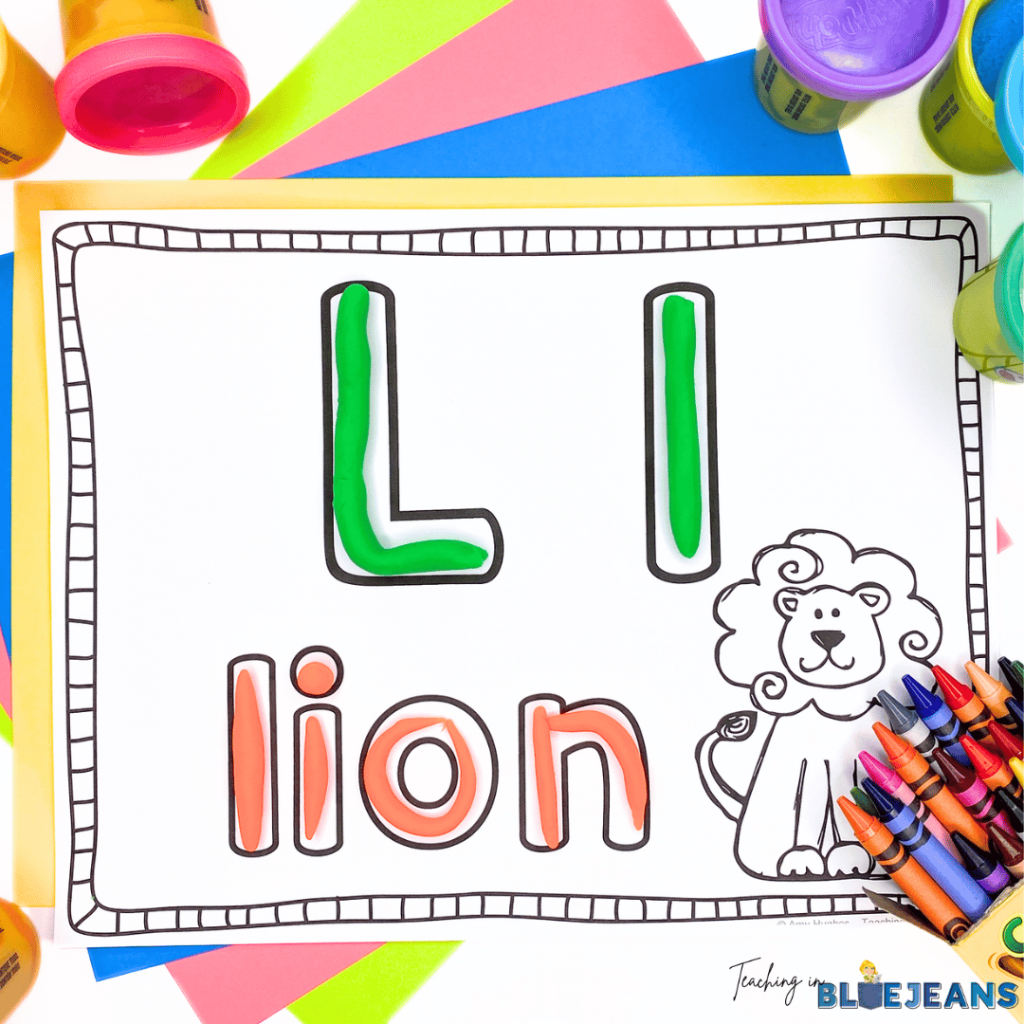
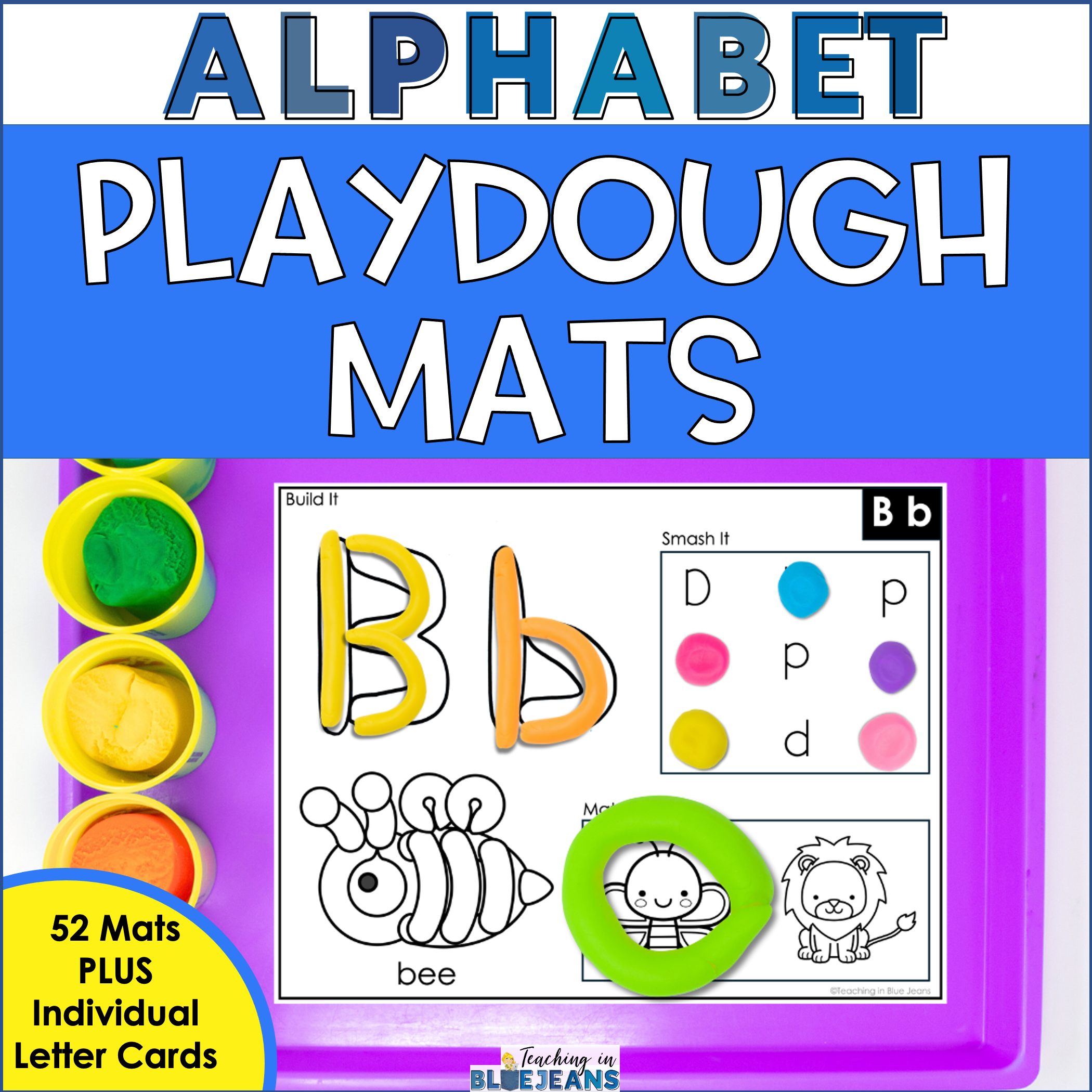
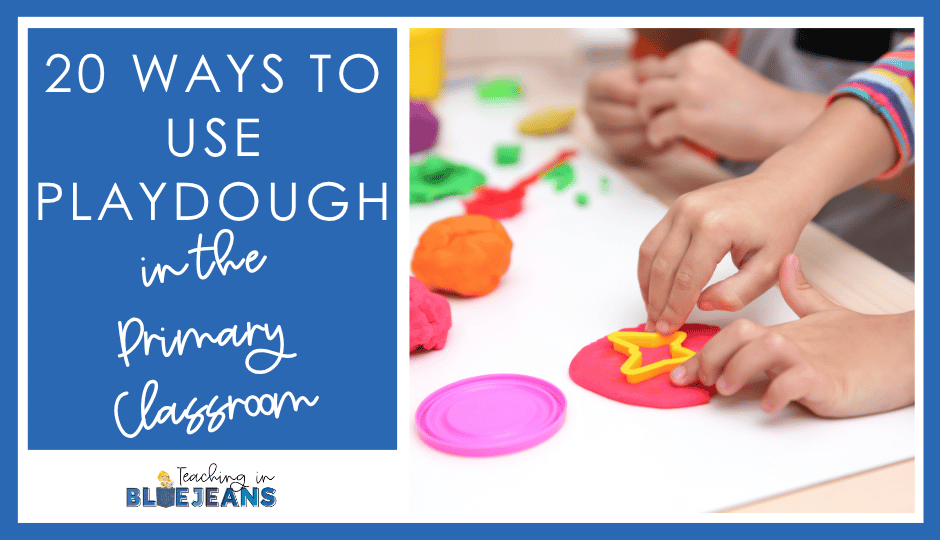
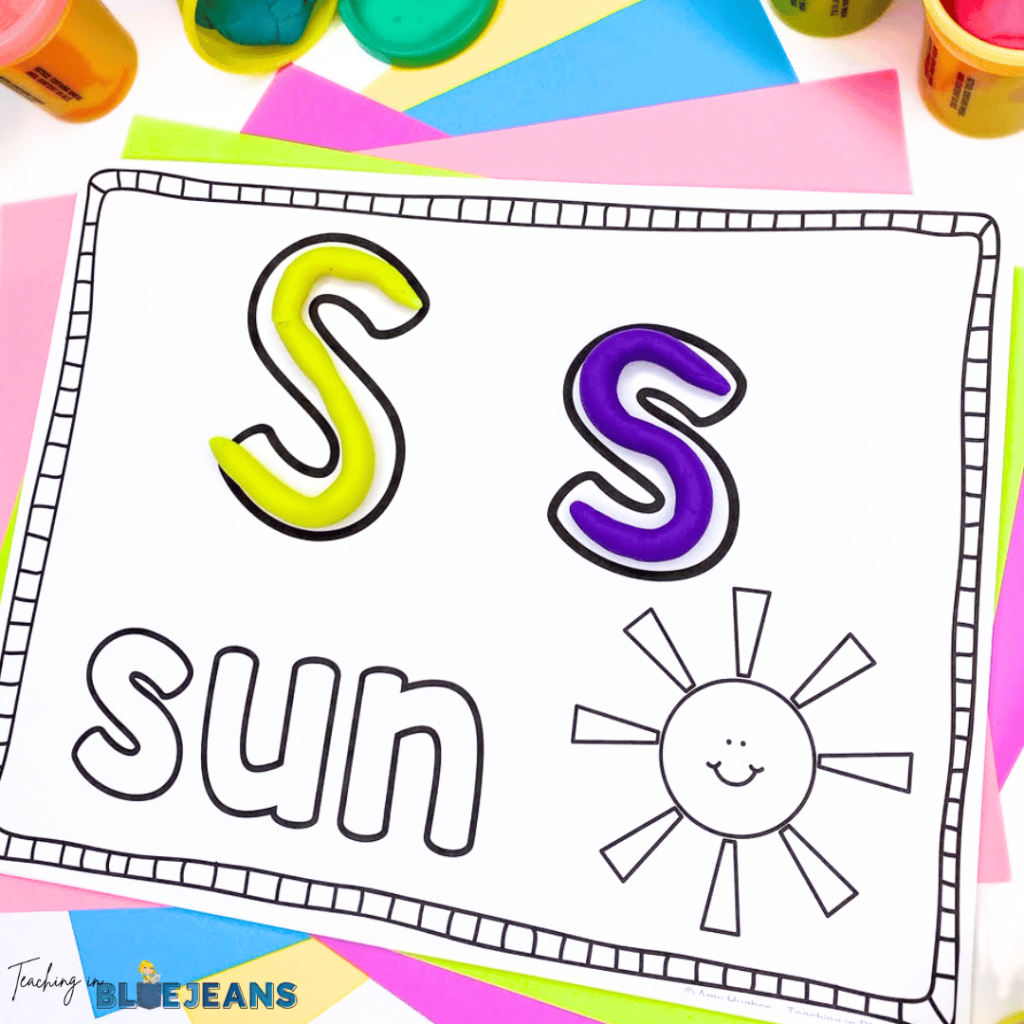
Playdough is a classroom favorite, and for good reason! Including playdough activities regularly in early education classrooms can support pre-writing skills in a big way. While just allowing kids to create as they wish with playdough is great for building hand strength and fine motor skills, you can elevate this activity to truly promote prewriting growth with a few simple tweaks.
Provide laminated letter mats (check out these in the Teaching in Blue Jeans store), scissors, and rolling pins in your playdough center. Ask your group to focus on rolling their dough into “snakes”, carefully cutting to size with scissors and aligning them onto the laminated mats to form letters. Learning to roll the dough and manage scissors slowly is great practice for developing controlled writing skills. Using playdough as your medium for practicing these fine motor skills will keep your classroom engaged and excited to participate!
Next on my list of fun, prewriting activities is another big favorite… shaving cream! This activity couldn’t be simpler, all you will need is a can of inexpensive shaving cream and a flat surface. Before you begin, make sure to provide students with explicit instructions on what you want them to do. The other alternative is to do this activity in small groups. To get started, put a small amount of shaving cream in front of them directly onto the table or a small tray. Ask the children to smear the shaving cream over the workspace in front of them.
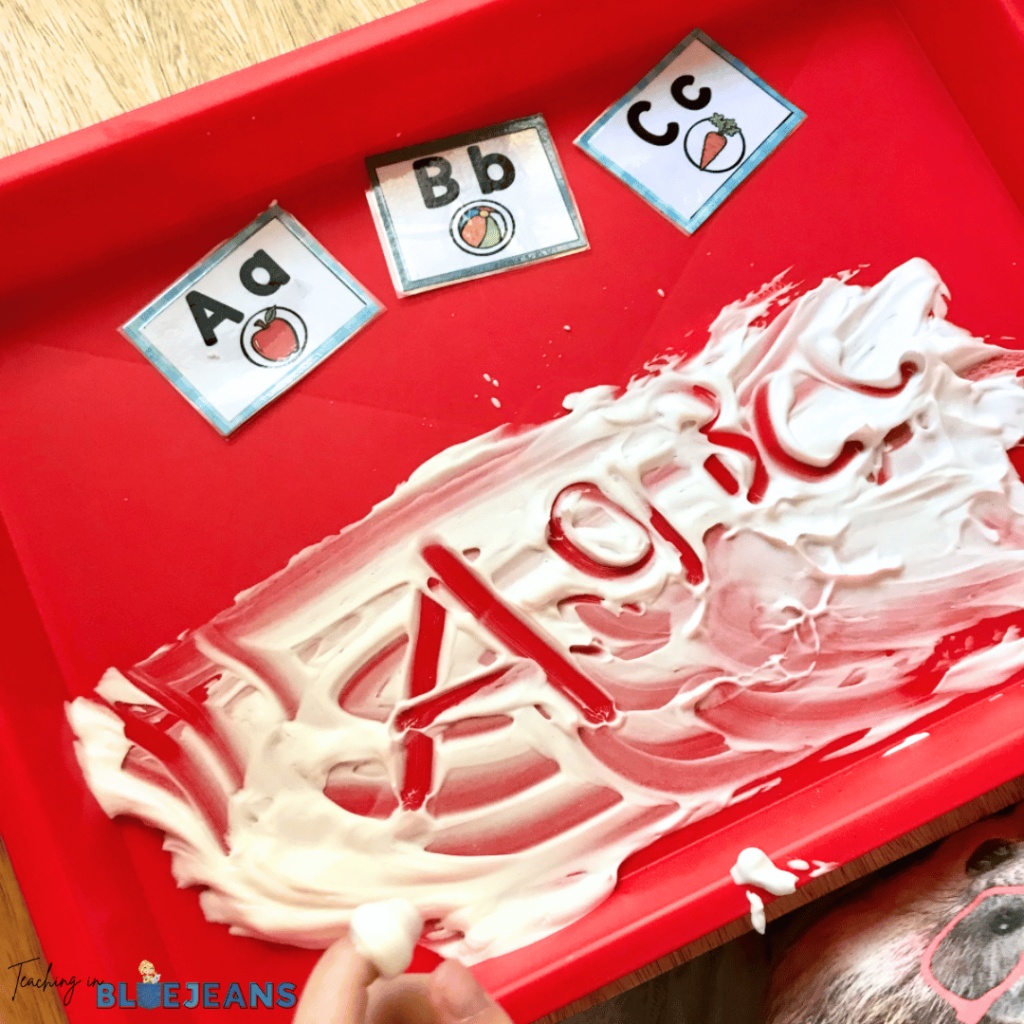
Next, provide instructions like:
Providing prompts like this will allow you to lead the activity with your children and encourage them to practice these prewriting skills.
For students who need more guidance, you can also model the line, shape, letter, or number you would like the children to make. Simply write it in the shaving cream and ask them to copy it as closely as they can. If I am going this route, I will often say something like “Simon says, make a square like this” to turn our writing practice into a fun game! This is always a super popular activity and is great when you need a little something different to reign in your classroom’s attention.
Next up on my list of fun and easy ways to practice prewriting skills is a super simple activity using common classroom commodities. All you need for this one are markers, paper, and small stickers of any kind. This activity can be done with a roll of butcher paper as a group or independently on regular paper.
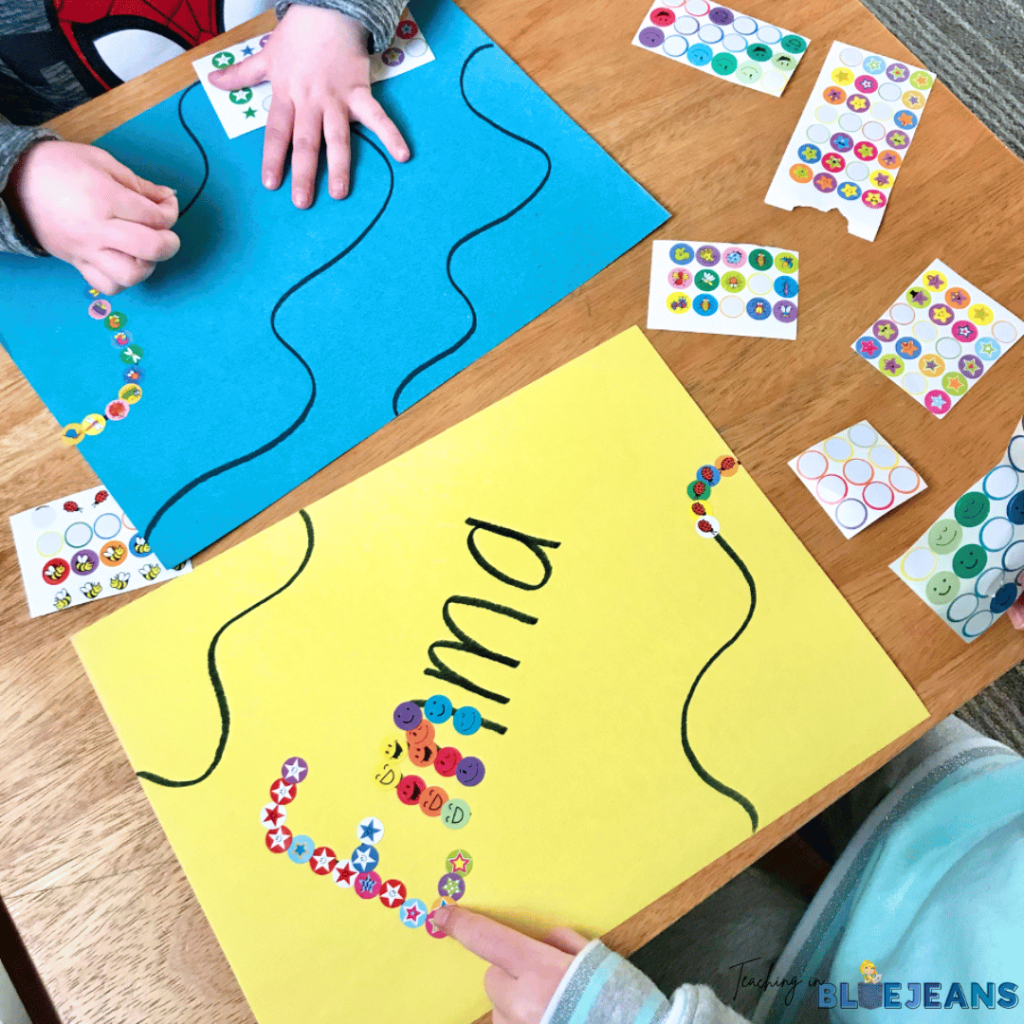
To begin, simply draw lines, shapes, letters, words, or anything that will capture your student’s attention on your paper of choice. If you are using a roll of butcher paper you will want to make sure there is enough space for your classroom to work together, side by side. Next, provide each child with a sheet of stickers and ask them to line up the stickers on what is written on the paper.
This activity is fantastic for shape review, name practice, alphabet and numeral review, and even sight words. If you’re running low on stickers, this is also easy to do with stamps and dot markers as well. You will want to communicate to your little ones that we are trying to get our stickers, stamps, or dot markers directly on the lines. This will help your classroom practice precision in their work. I also find this helps form a community when done together as a class!
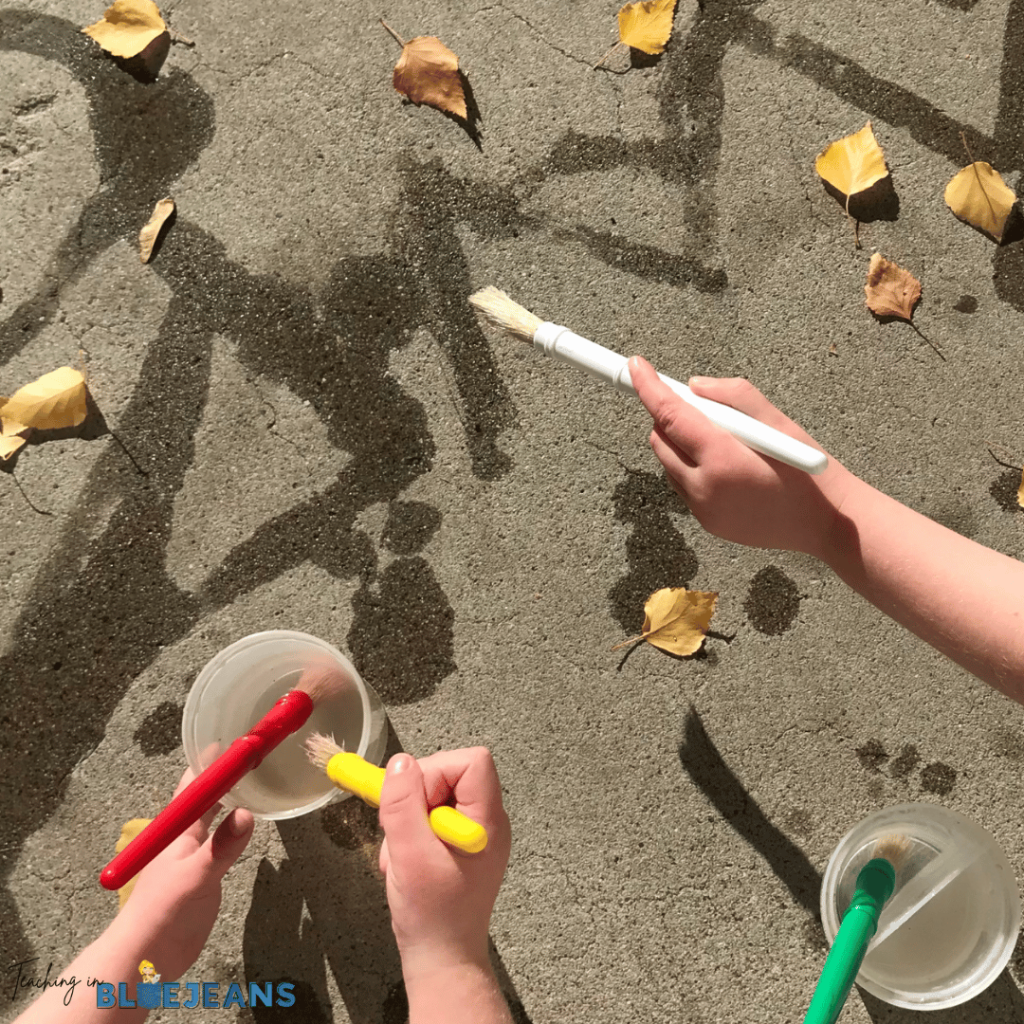
Next up is an activity that’s great for the warmer months, or when you just really need to get your class outside! All you need for this one is small cups, watercolor brushes, and water. Provide each child with a cup of water and brush. Encourage the children to practice painting lines, shapes, letters, and numbers on the sidewalk, picnic tables, play equipment, and anything else that’s around.
Not only will this simple activity help your little learners get some extra fine motor practice in, but it’s also a great way to bring some peace to a rambunctious group with the calming effect of enjoying art time outside. I like to save this prewriting activity for Friday afternoon when we’re all feeling a bit restless. As students progress, you can have them write other things too such as their name or weekly sight words. Bonus- there’s basically zero cleanup, thanks to the use of water rather than paint!
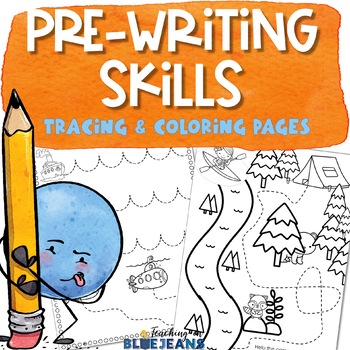
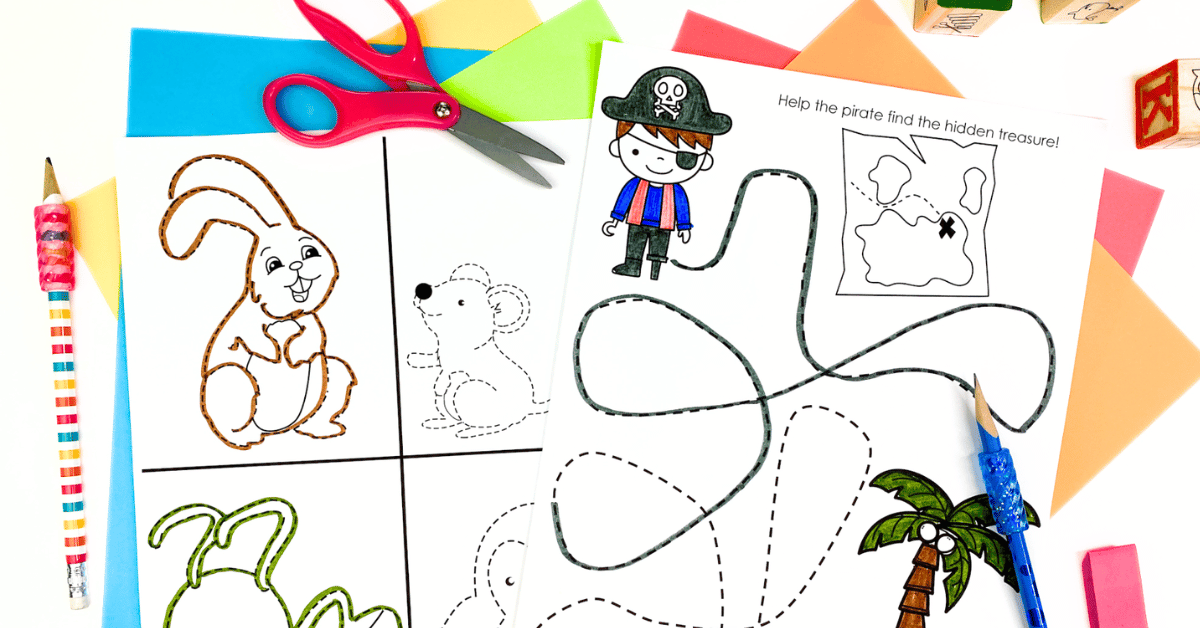
Finally, I have a done-for-you resource just in case you are looking for a “print and go” option to practice prewriting skills. My Prewriting Worksheets feature 29 pages to use in your classroom. They work wonderfully for morning work, writer’s workshop, fine motor centers, and independent learning time. I know you’ll love having a no-prep, easy way to practice these skills in your classroom.
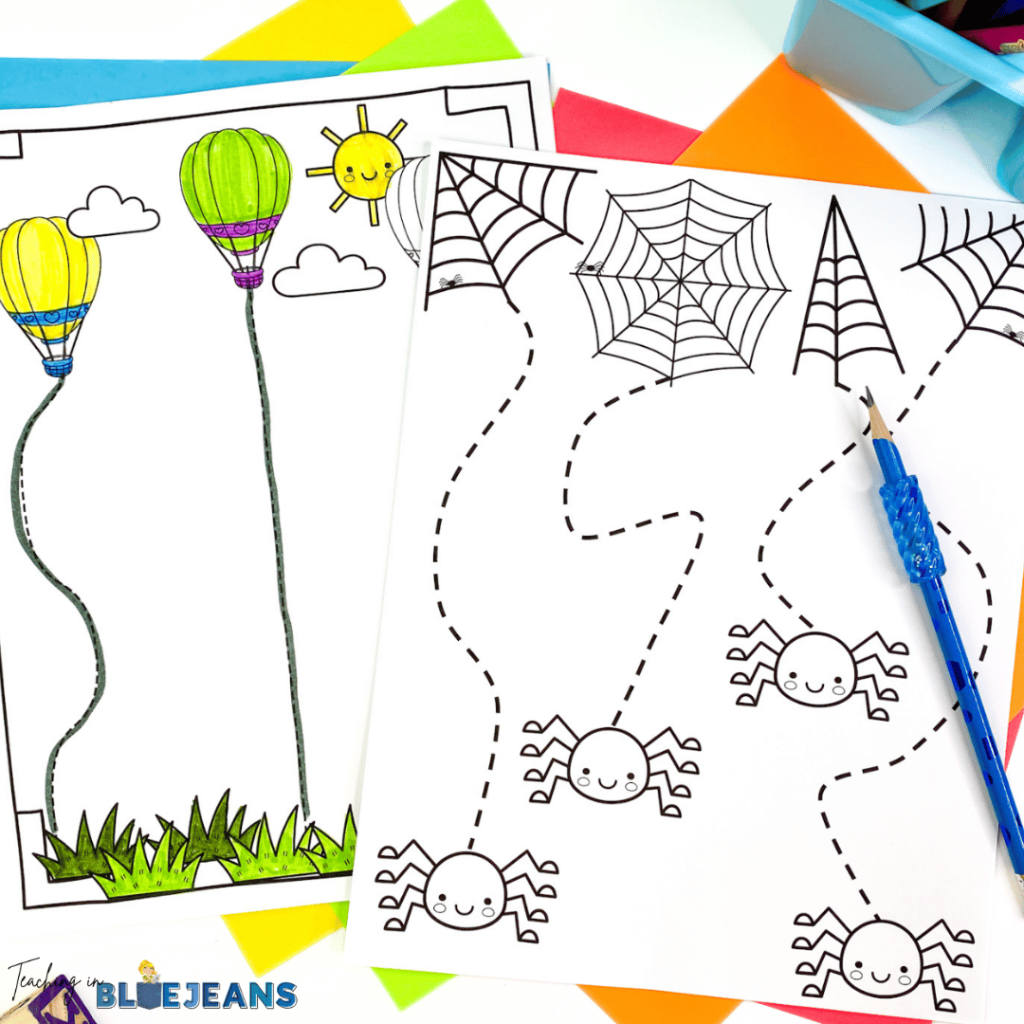
These pages feature a variety of topics that captivate young children including unicorns, transportation, bugs, animals, fairytales, and more! There is sure to be something for everyone in this packet. These pages are very versatile! You can use them in the traditional format with markers, crayons, or pencils as well as with dry-erase sleeves to cut down on copies.
Beyond tracing practice, these worksheets are also great for alternative activities to practice prewriting. Try providing a small cup of beads and allowing your students to place the beads carefully on the lines. You can also use stickers, dot markers, cotton swabs, and paint or stamped fingerprints! No matter how you decide to use these in your classroom, they are sure to excite your children and support them in their journey to becoming excellent writers!
I hope you enjoyed this list of fun ways to weave prewriting into your routine! Once you find the activities that your students like best, it’s simple and easy to include these activities daily. While many of these activities require only simple classroom supplies, you can also find the resources mentioned along with other fantastic resources to support fine motor development and prewriting in my store! If you’re looking for more inspiration, be sure to take a peek!
Pin this post on Pinterest to keep these ideas for practicing prewriting skills at your fingertips!